REVIEW · NEPAL
From Kathmandu: Everest View from Nagarkot & hike to Changu
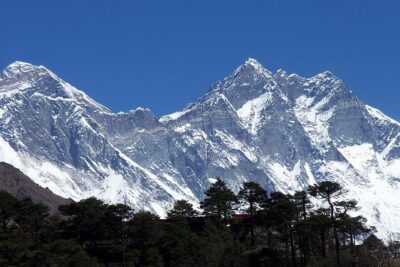
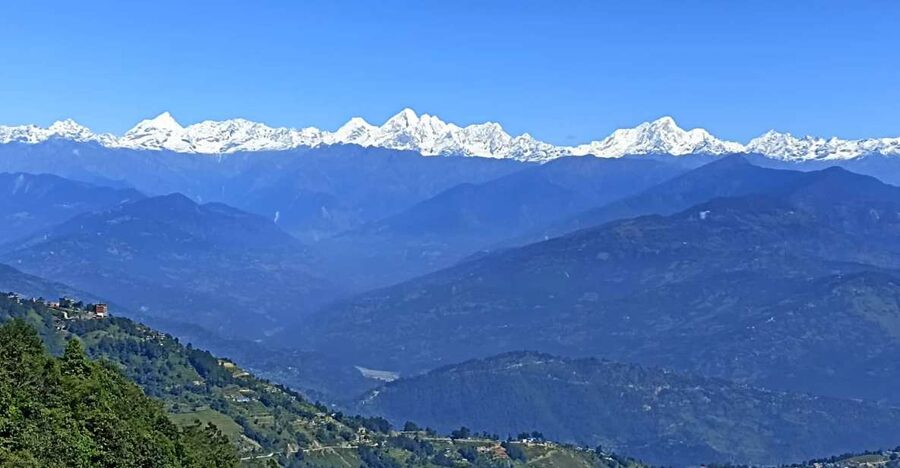
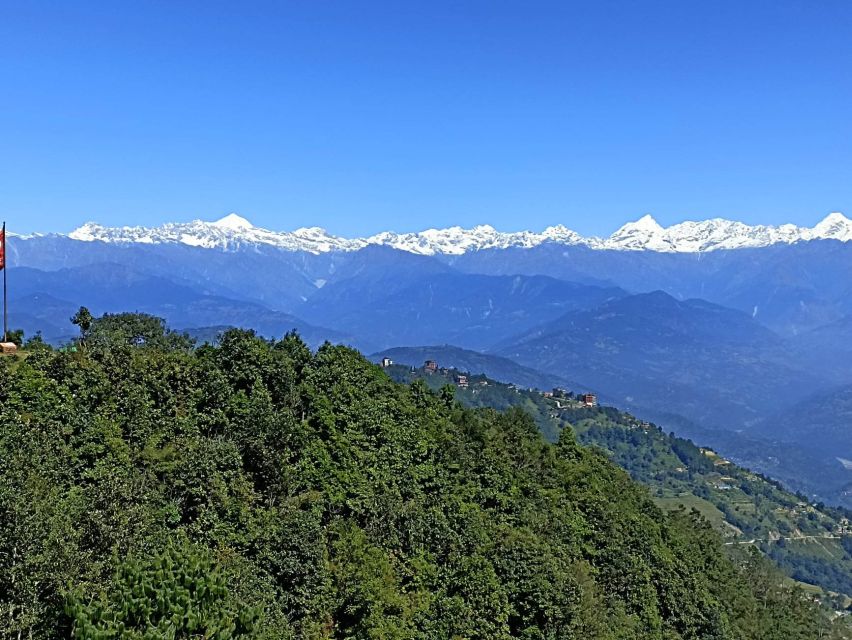
Nagarkot gives you a quick shot at Himalayan drama without committing to a multi-day trek. On a clear morning, you can see Everest, Gauri Shanker, Dorje Lakpa, Langtang, and Ganesh Himal. Then you leave the viewpoint behind and walk through farms, wooded paths, small villages, and everyday Nepalese life before reaching Changunarayan Temple. I like the change of scene, from a high mountain lookout to quiet rural lanes. I also like that guides such as Sagar and Shekhar add useful context about religion, farming, local plants, and history instead of simply leading you down the trail.
The main drawback is simple: the Himalayan view depends entirely on weather. Several people had enjoyable days without seeing Everest, especially during cloudy, rainy, or hazy months. The walking is usually gentle, but one section is uphill, and the full outing can feel more active than a sightseeing bus tour. Bring proper walking shoes, water, sun protection, and enough cash for food and extras.
Key points to know before you book
- Sunrise and Everest are weather dependent: Nagarkot can offer a fine Himalayan panorama, but clouds and haze often hide the peaks.
- The walk takes about three hours: Expect a mix of flat trail, an uphill section, and a little downhill walking, with roughly 7.5 kilometers possible.
- Rural Nepal is the real attraction: You may pass seasonal fields, goat herders, village homes, local alcohol production, forests, and a suspension bridge.
- Changunarayan is more than a final stop: Its stone and wood carvings, religious images, and ancient inscriptions give the walk a strong cultural finish.
- The guide makes a major difference: Sagar and Shekhar are frequently praised for their English, Japanese, cultural knowledge, patience, and ability to adjust the pace.
- Food and drinks are extra: Lunch, tea, coffee, bottled water, snacks, and entry charges are not included in the $43 price.
Why this Nagarkot walk works so well
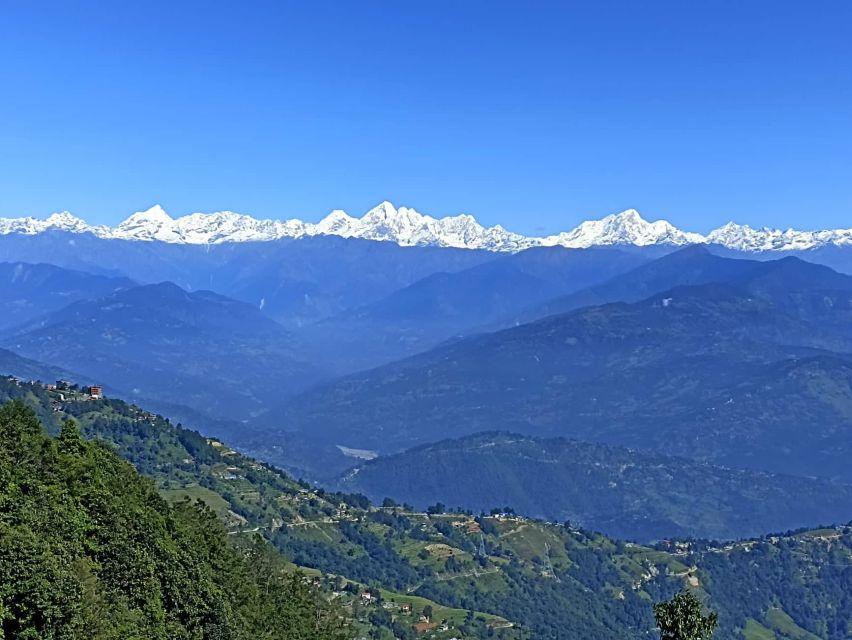
This trip combines three things that are often sold separately: a mountain viewpoint, a moderate day walk, and a major cultural site. You start high above Kathmandu at about 2,175 meters, then spend much of the day moving through the quieter hills east of the capital.
I like this format because you do not spend the entire day sitting in a car. The drive to Nagarkot takes about an hour and a half, but after the viewpoint and a short break, you continue only about 15 minutes before starting the walk. The route lets you see Nepal at a human pace. You have time to notice terraced fields, farming work, religious shrines, village paths, and changing vegetation.
The tour costs $43 per person. That is fair value if you are staying in Kathmandu and want private transport, a licensed guide, and a full half-day outside the city. It is less of a bargain if you only want a guaranteed Everest photograph, because no guide can control cloud cover and the mountain view may not appear.
The experience is offered privately or in a small group. Solo participants may appreciate the flexibility of a private outing, though solo guests who prefer company should ask about joining a small group. Pickup and return are available from Kathmandu or Thamel, and the guide can collect you from your hotel when you provide the details.
More Everest Base Camp Treks in Kathmandu:
- Everest Base Camp Trek – 14 Days
★ 5.0 · 1,499 reviews - Everest Base Camp Trekking
★ 5.0 · 485 reviews - Everest Base Camp Trekking – 13 Day
★ 5.0 · 365 reviews
The early drive from Kathmandu to Nagarkot
A very early start is worth considering if your main goal is sunrise. One pickup began at 4:50 a.m., allowing time to reach Nagarkot before the morning light spread across the hills. The drive passes through a quieter Kathmandu before climbing along winding roads toward the viewpoint.
You should eat a good breakfast at your hotel or arrange a packed meal. The tour does not include food, and you may not want to begin a three-hour walk hungry. A small roadside break for tea or coffee and a toilet stop is possible, but you should not treat that as a full breakfast stop.
The private car is useful here. You avoid arranging a taxi before dawn and can leave your hotel with the guide and driver already organized. The driving has a practical purpose, since Nagarkot is too far from central Kathmandu to reach comfortably on foot or by a quick local transfer.
The roads are twisty as you climb. If you get carsick, sit near the front and keep water close. The route is part of the experience, but it is not a smooth expressway journey.
Nagarkot viewpoint and the Himalayan chance
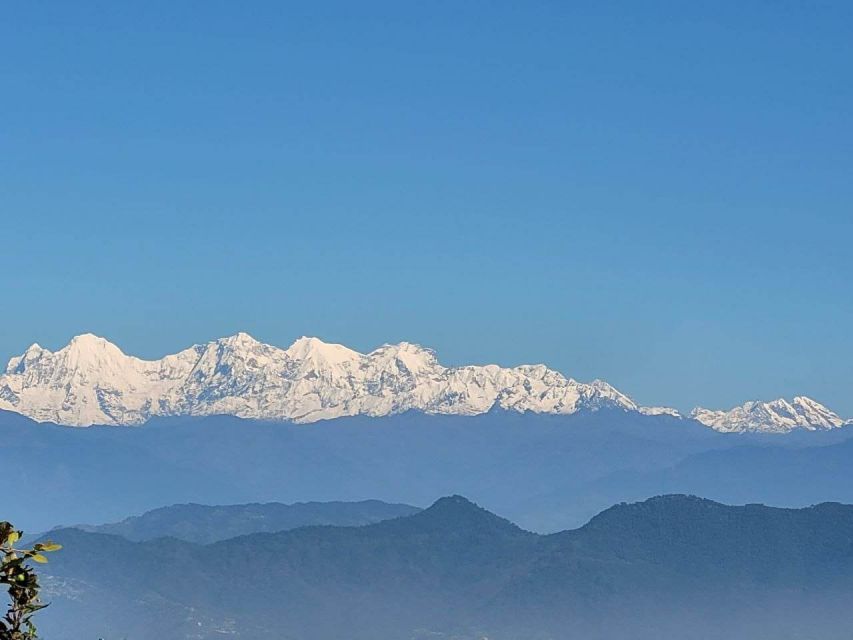
Nagarkot is the first major stop and the one most affected by weather. From the viewpoint, you may see a broad line of Himalayan peaks, including Mount Everest, Gauri Shanker, Dorje Lakpa, Langtang, and Ganesh Himal. On a clear day, the scene can be spectacular, especially when early light catches the snow.
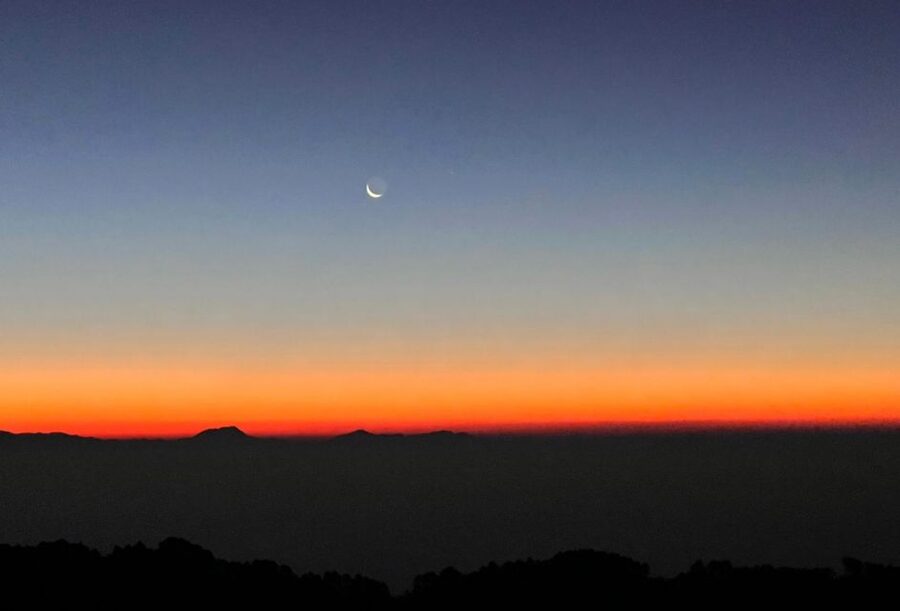
Do not book this outing as an Everest guarantee. Cloud, mist, rain, and haze can hide every major peak. Even in poor conditions, you can still see the Kathmandu Valley, surrounding hills, and the changing colors of the morning sky. Several outings had no mountain view but remained worthwhile because of the walk and temple.
The timing matters. Sunrise is often the best chance for clear air, though the activity description also allows a daytime schedule depending on availability. October through November and February through April are the most favorable periods mentioned for mountain visibility. June, the monsoon months, and other wet or hazy periods are less reliable.
At about 2,175 meters, Nagarkot is not high by Himalayan trekking standards, but it can feel cool before sunrise. Wear a light jacket or warm layer that you can remove later. The temperature may change quickly once the sun reaches the trail.
Use the viewpoint to get your bearings. It gives you a sense of how far Kathmandu spreads below and how the hills rise toward the mountains. After a short photo stop, tea, or coffee, you continue by car for roughly 15 minutes to the walking start.
The three-hour route through villages and fields
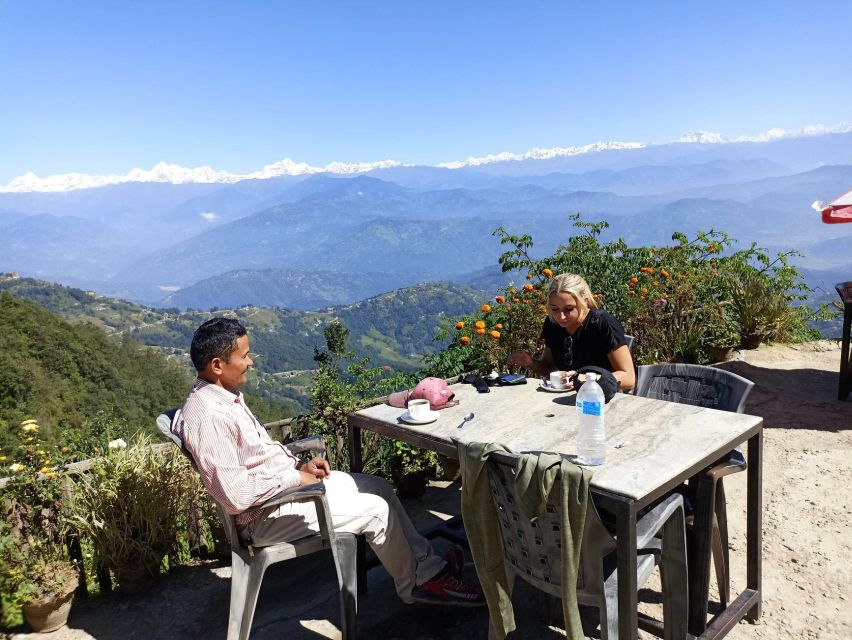
The walk to Changunarayan takes about three hours. It is generally described as gentle to moderate, but you should not mistake it for a completely flat stroll. The trail begins fairly level, climbs in places, then becomes flatter with a little downhill walking near the end.
One useful detail is the route’s variety. You may pass through forest, open farmland, village lanes, and cultivated hillsides in a single morning. Seasonal farming is visible along the way, and you may see farmers with goats, local alcohol production, and ordinary household activity. This is where the excursion feels most different from a standard Kathmandu sightseeing loop.
The route also provides a break from traffic, horns, and fumes. That matters after time in central Kathmandu. You are not walking through an untouched wilderness, but you do get long stretches where the city feels far away.
The guide helps you understand what you are seeing. Shekhar has been described as having decades of hiking and trekking experience, while Sagar is praised for clear English, patience, and a warm manner. Both have been especially useful for explaining Nepalese and Hindi history, local religions, plants, animals, and customs. Guides have also taught visitors a few Nepali phrases and adjusted their speed to suit the group.
Expect some sun. A spring outing was particularly hot, with strong ultraviolet levels, even though the morning began pleasantly. Wear sunscreen, a hat, and clothing that covers your shoulders if you burn easily. In the rainy season, carry an umbrella and protect your phone or camera.
A suspension bridge is one of the more memorable points along the route. It adds a little excitement without turning the walk into an adventure trek. If heights make you nervous, take your time and let others pass.
More hikes and treks around Kathmandu:
- Nagarkot Sunrise View and Day Hiking from Kathmandu
★ 5.0 · 471 reviews - Annapurna Circuit Trek with Tilicho Lake
★ 5.0 · 368 reviews - Everest Base Camp Trek
★ 5.0 · 350 reviews - Everest Base Camp Trek -14 Days
★ 5.0 · 321 reviews
Temples along the way
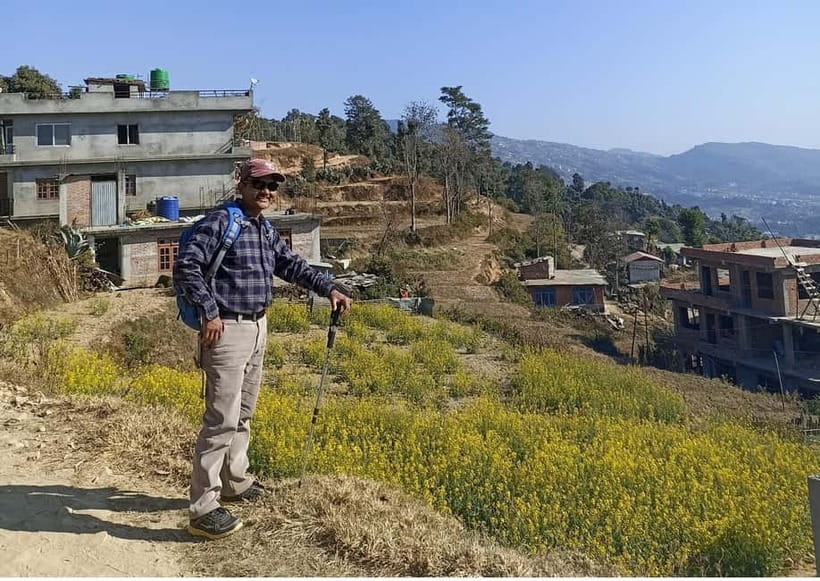
The route includes a Hindu temple before you reach Changunarayan. This smaller stop helps prepare you for the final site, where the religious setting is larger and the carved details are more extensive.
Your guide can explain the difference between the sites and point out religious symbols, images, and local practices. This is one reason the trip works better with a guide than as a self-guided walk. The temples are not just photo stops. They make more sense when you understand how Hindu and Buddhist traditions appear across Nepal.
The exact order of stops can vary with the walking pace and timing. Some descriptions also refer to Trisul Dada as a short photo stop, lasting about 20 minutes. Treat it as a viewpoint and pause rather than a separate major attraction.
Arriving at Changunarayan Temple
Changunarayan is the cultural payoff at the end of the walk. The temple is a UNESCO World Heritage site and is known for Nepalese stone carving, wood carving, religious icons, and an ancient Sanskrit pillar associated with the fourth century.
After walking through rural areas, arriving at the temple gives the day a clear sense of purpose. You move from fields and village paths into a historic religious center where the details deserve close attention. Look at the carved figures and woodwork rather than rushing through for a single photograph.
The temple visit is listed at about 45 minutes, including sightseeing, a guided explanation, and possible shopping. That is enough time for a useful introduction, though not an exhaustive study of every carving. If you care strongly about architecture or religious art, tell your guide early so the temple stop receives the attention you want.
Modest clothing is the sensible choice at a religious site. Comfortable clothes are already recommended for the walk, and a light layer can also help with sun and changing temperatures.
Lunch, costs, and what the $43 covers
Lunch is usually taken in or near Changunarayan village after the walk, before or around the temple visit depending on the day’s timing. The food is not included in the $43 price, and one useful warning is to carry cash. Tea, coffee, bottled water, snacks, drinks, and attraction entry charges are also excluded.
The price includes private transport from your hotel, return transport to your hotel or pickup point, and a licensed guide. That package makes sense if you value convenience and interpretation. You are paying not only for the drive, but also for having someone explain the rural setting and help manage the route.
Bring enough money for lunch, drinks, temple entry, and anything you might buy in the village. The activity information does not specify exact extra charges, so it is better to have cash than to depend on a card.
There is also a highlighted option for a typical Nepali dinner with a family, but the detailed schedule describes lunch at a local restaurant and does not include a family meal in the listed price. Confirm this point before booking if that dinner is important to you.
How difficult is the walk?
Most people with ordinary walking ability should find the route manageable, but it is not suitable for everyone. The walk takes about three hours and includes a few steeper sections. Good walking shoes or hiking shoes are a better choice than sandals or smooth-soled trainers.
The trail can be wet and slippery during rain. In hot weather, the sun becomes the bigger issue. Carry water, snacks, sunscreen, a hat, and an umbrella during the rainy season. A light day pack is all you need.
The guide can usually adjust the pace. This was particularly helpful for people who wanted a relaxed walk or needed extra encouragement on uphill sections. Still, you should be comfortable walking for several hours on uneven ground.
The activity is not suitable for pregnant women, people with back problems, wheelchair users, people with high blood pressure, or people over 70. Those restrictions are stated directly in the tour information, so take them seriously rather than assuming the route is a simple paved promenade.
When to go for the best experience
For mountain visibility, October and November, followed by February through April, offer the best chance according to the provided seasonal guidance. Clear winter mornings can be cold at Nagarkot, so layer your clothing.
Spring brings stronger sun and warmer walking conditions. April can be very hot, and sun protection is essential. The hills may still look excellent even when the Himalayan peaks fade behind haze.
The monsoon period can bring rain, low cloud, and limited visibility. It also makes the trail wetter. You may still enjoy the farms, villages, and temple, but you should not make Everest the main reason for booking during this period.
The tour allows cancellation up to 24 hours before departure for a full refund, and you can reserve without paying immediately. That flexibility is useful if the forecast looks poor, but check the specific start time and availability before committing.
Who will enjoy this day trip most?
I would choose this for someone who wants to leave Kathmandu without spending a night away. It suits first-time visitors who want mountain scenery but are not ready for a demanding trek, and it gives repeat visitors a quieter look at the valley’s surrounding hills.
It is also a good fit if you enjoy learning while walking. The best part is not only the viewpoint. It is the steady change from mountain panorama to farms, village life, forest, religious sites, and carved temple architecture.
You may prefer another outing if your priority is a guaranteed Everest photograph, a long mountain trek, or a fully included meal. Weather can defeat the first goal, the walk is too short for the second, and the food and entry charges are extra.
The guide is a major part of the value. Sagar and Shekhar are the names most associated with this experience, and both have been praised for friendliness, clear explanations, punctuality, and patience. Language support is available in English, Japanese, Hindi, and Chinese.
Should you book the Nagarkot to Changunarayan walk?
Book it if you want a practical half-day escape from Kathmandu with a chance of Himalayan views and a real rural walk. The strongest reasons are the route’s variety, the knowledgeable local guiding, and the way Changunarayan gives the outing a worthwhile cultural finish.
Book with realistic expectations about the weather. Everest may be hidden, but the day can still deliver valley views, village paths, a suspension bridge, farming scenes, and a fine temple. For $43, including transport and a licensed guide but not food or entrance fees, it is a sensible choice for an active visitor who wants more than a viewpoint photograph.
FAQ
How long does the Nagarkot to Changunarayan experience take?
The activity lasts about six to six and a half hours, including hotel transport, the Nagarkot viewpoint, the walk, the temple visit, and the return drive.
How long is the hike?
The walk from the Nagarkot area to Changunarayan takes about three hours. One recorded route covered roughly 7.5 kilometers.
Can I definitely see Mount Everest?
No. The Himalayan view depends on weather, cloud, mist, and haze. Nagarkot can show Everest and other peaks on a clear day, but the mountains may be hidden.
What other mountains might I see?
Possible peaks include Gauri Shanker, Dorje Lakpa, Langtang, and Ganesh Himal, along with Mount Everest.
Is the walk difficult?
The route is generally gentle to moderate. It begins fairly flat, includes an uphill section, and finishes with flatter and slightly downhill walking. Walking shoes are recommended.
Is lunch included?
No. Lunch, tea, coffee, drinks, bottled water, snacks, and attraction entry charges are not included.
What should I bring?
Bring a hat, camera, snacks, drinks, water, hiking shoes, and comfortable clothes. Use sun protection, and take an umbrella during the rainy season.
Can the tour pick me up at my hotel?
Yes. Hotel pickup is optional. You should provide your hotel details when booking so the guide can arrange the pickup.
What languages are available?
Live guiding is available in English, Japanese, Hindi, and Chinese.
Who should avoid this activity?
It is not suitable for pregnant women, people with back problems, wheelchair users, people with high blood pressure, or people over 70.
Just added around Kathmandu
- Kathmandu: Nagarkot Sunrise and Hike Tour to Changu Narayan★ 4.7 · 151 reviews
- Pokhara: 2 Day Ghorepani & Poon Hill Private Trekking★ 4.9 · 8 reviews
- Kathmandu: Nagarkot Sunrise Tour with Day Hike★ 4.7 · 13 reviews
- Pokhara: 5-Day Annapurna Base Camp (ABC) Trek★ 5.0 · 9 reviews
- Kathmandu: Shivapuri Day Hike with Lunch★ 4.9 · 25 reviews
- Kathmandu: 6-Day Limitless Langtang Trek★ 5.0 · 21 reviews
- Kathmandu: 6 Days Langtang Valley Trek with Kyanjin Ri★ 5.0 · 7 reviews
- Kathmandu: 14-Day Everest Base Camp with Kala Patthar Trek★ 4.2 · 21 reviews