
REVIEW · TANZANIA
Kilimanjaro 7 Day Private Trekking Experience
Kilimanjaro’s Machame Route gives you the mountain in clear chapters: thick rainforest, open moorland, high desert, glacier views, and a midnight push to Uhuru Peak. This private seven-day trip is built around slow acclimatization, with a key climb to Lava Tower followed by a descent to sleep lower at Barranco Camp.
I like the private format, since your group gets its own guides and crew rather than being folded into a large departure. I also like the practical support: tents, cooks, hot drinks, meals, park transfers, and pre and post climb accommodation are included. The main caution is the summit schedule. Day six involves a midnight start, a long ascent, and a long descent, so you need strong fitness and a willingness to accept a hard physical challenge.
Key points to know before you book
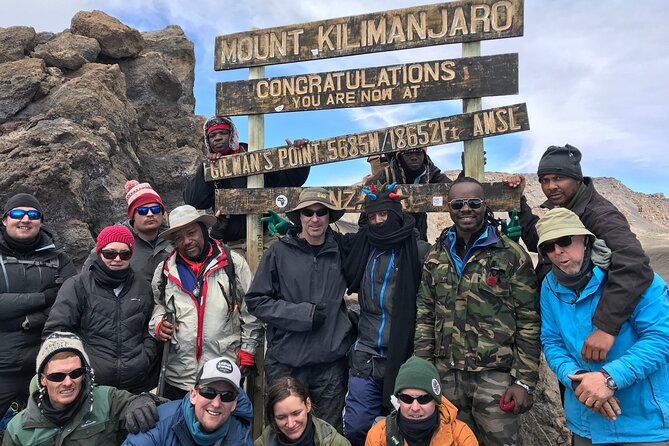
- Machame Route scenery: You move from rainforest at 1,800 meters to the 5,895-meter summit, with major changes in vegetation and terrain.
- Private service: Only your own group participates, with guides, porters, cooks, and camping staff assigned to support the climb.
- Acclimatization built in: The Lava Tower day follows the useful climb-high, sleep-low pattern before you reach Barranco Camp.
- Long summit day: Expect a midnight departure, six to eight hours up, and seven to eight hours back down.
- Included mountain support: Food, tents, mountain crew salaries, specified transfers, and six breakfasts, six dinners, and seven lunches are included.
- Strong customer feedback: The experience carries a 5 out of 5 rating from 40 reviews and a 100 percent recommendation, with Oscar, Saul, Jonas, porters, and cooks often praised for organization and personal help.
What the $3,120 price covers
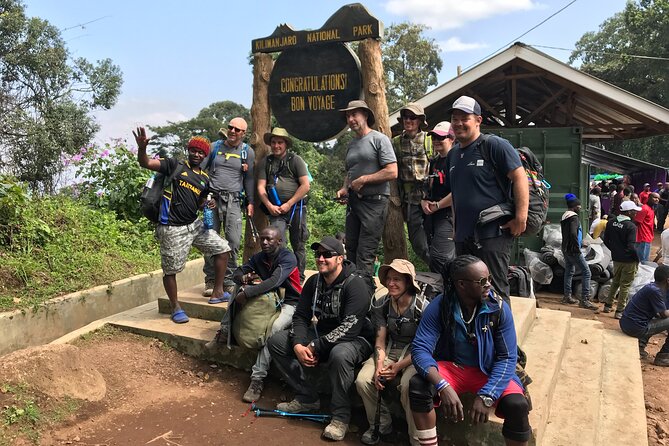
At $3,120 per person, this is not a simple guided walk. Your price pays for a full mountain operation: a guide team, porters, cooks, camping crew, tents, meals, park access arrangements, transfers specified by the operator, and accommodation before and after the climb.
That matters on Kilimanjaro. You are not carrying every tent, cooking item, and group supply yourself. A cook prepares meals, camp staff handles the mountain camp routine, and porters move equipment. You still carry your personal day pack, but the support system makes a seven-day climb possible for many fit people who would struggle with a fully self-supported trip.
The package includes seven lunches, six dinners, and six breakfasts. It also includes pre and post climb accommodation, though the supplied information does not specify how many nights or the exact room arrangement. On the final day, you return to Kilimanjaro Wonders Hotel in Moshi for a hot shower, lunch, dinner, and your certificate of achievement.
The value depends on how much you want handled for you. If you only need a guide and intend to arrange lodging, meals, and equipment separately, the price may seem high. If you want one company to coordinate the crew, food, tents, transfers, and hotel arrangements, the package is easier to justify.
Personal climbing gear is not included, although it can be hired locally. You also pay for guide and porter tips, travel and baggage insurance, telephone charges, and laundry. Set aside money for tips before you go. The team includes more than one person, and the final morning is presented as a natural time to thank the crew.
More Private Hiking Tours in Tanzania
- Private Full Day Hiking Experience to Marangu Route
★ 5.0 · 61 reviews - Private Kilimanjaro Hike 7 Day Lemosho Route
★ 5.0 · 60 reviews - Full Day Private Hiking Tour to Kilimanjaro Mountain
★ 5.0 · 22 reviews
Day 1: Machame Gate and the rainforest
The first mountain day begins around 9 a.m., when the guides and porters meet you for a final check of equipment and supplies. Anything you do not want on the mountain can be left in a hotel lock-up before the drive to Machame Gate.
At the gate, you register with Kilimanjaro National Park staff, receive a packed lunch, and begin walking. The route climbs from about 1,800 meters to 3,000 meters over roughly 11 kilometers. Allow about six hours.
The rainforest is a fine opening act. It is green, shaded, and noticeably different from the dry conditions higher up. The path climbs steadily rather than launching straight into a brutal grade, but your legs will know they are working. Take this first day slowly. There is no prize for arriving early at Machame Camp.
The camp is reached in the late afternoon. After you arrive, the crew sets up the practical side of mountain life, and you settle into your tent, eat dinner, and prepare for the next morning. The included tent and food service are especially useful here, since your attention can stay on hydration, rest, and sorting personal gear.
Day 2: Shira Camp and the first high views
You receive coffee, tea, or hot chocolate in your tent around 6:30 a.m., followed by breakfast. This small routine becomes important on a cold mountain morning. A hot drink gives you a gentle start before packing up.
The route leaves the rainforest and crosses into open moorland. Vegetation becomes shorter and thinner, and the path reaches a rocky ridge before turning toward a river gorge and the Shira Plateau. The day covers about nine kilometers, rises from 3,000 to 3,850 meters, and takes roughly six hours.
The main reward is the wider view. From the Shira area, you may catch your first sight of the Western Breach and its glaciers. The mountain begins to feel less like a forest hike and more like a high-altitude expedition.
At Shira Camp, boiled drinking water and hot washing water are provided. Do not treat the washing water as a full shower, but it is welcome after several hours on the trail. You should also ask the crew how much water to drink and keep your own bottle or hydration system easy to reach.
Day 3: Lava Tower, Barranco, and the climb-high rule
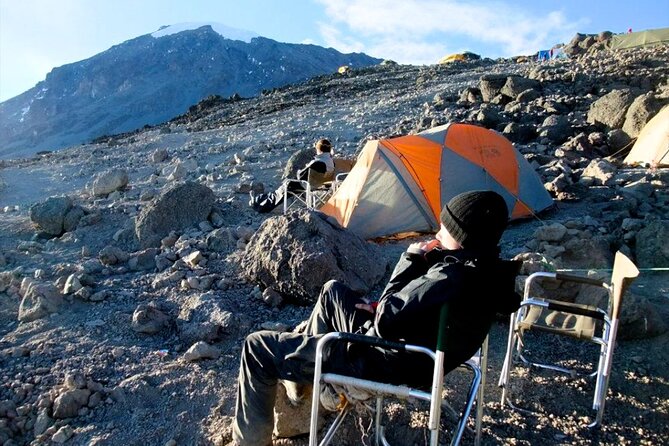
Day three is the key acclimatization day. You leave Shira Camp at 3,850 meters and climb to Lava Tower at about 4,600 meters. The total distance is around 12 kilometers, with roughly seven hours of walking.
The terrain changes again to semi-desert. Plant life is sparse, the air feels thinner, and the route offers strong photo opportunities. Lava Tower is not only a landmark. It lets your body spend time at a higher altitude before you descend to sleep at Barranco Camp, around 3,950 meters.
This is the trip’s clearest example of the climb-high, sleep-low method. You work up to 4,600 meters, take a break and eat lunch, then drop about 650 meters to Barranco. The descent can feel odd after so much effort climbing, but it is a useful part of the plan.
The day is described as the toughest so far, and you should believe that. The combination of altitude, steady climbing, and a seven-hour schedule can expose problems early. Tell your guide if you feel unwell. The private setup makes it easier to discuss pace and symptoms without worrying about keeping up with a large group.
Same trailheads, a different kind of day:
- 8-Day Small-group Lemosho Kilimanjaro Summit Trekking
★ 5.0 · 186 reviews - Mountain Kilimanjaro Day Hike
★ 5.0 · 102 reviews - 4 Days Mount Meru Trekking
★ 5.0 · 55 reviews - Best Kilimanjaro hiking day trip tour with Kilinge Adventures
★ 4.5 · 54 reviews
Day 4: Barranco Wall and Karanga Valley
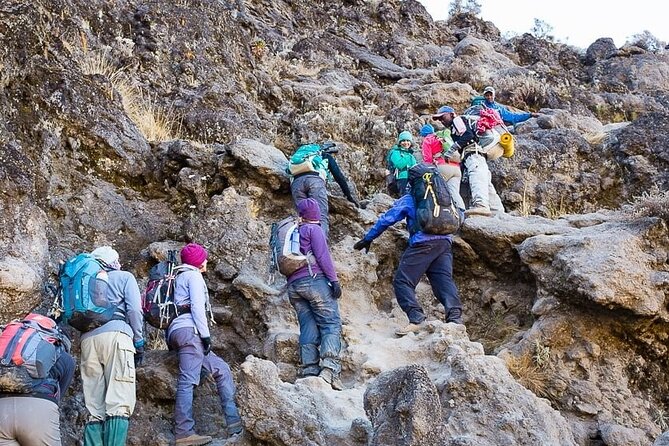
After breakfast, you tackle Barranco Wall. The scramble takes about an hour and a half and is the most technical section of the day. In places, you use your hands to help pull yourself upward.
This is not presented as a rock-climbing trip, but it is more than a normal uphill trail. Keep both hands free, follow the guide’s instructions, and move carefully. The wall can look intimidating from camp, yet the route is broken into sections rather than one sheer climb.
After reaching the top, you descend into the greener Karanga Valley. The day covers about seven kilometers and gains roughly 250 meters. The route is shorter than day three, but the wall gives it a different kind of difficulty.
Camping on the ridge above the valley helps with acclimatization and sets up the next stage toward Barafu. You also get time to rest, eat, and manage sore legs before the high camp. This is a day where a calm pace matters more than speed.
Day 5: Barafu Camp and the South Circuit
The path to Barafu Camp gains about 400 meters over six kilometers. You pass views of Kibo’s glaciers and reach the junction where the Mweka descent route meets the Machame trail.
The route crosses ridges and valleys before joining the Mweka Route, which you use to leave the mountain. By now, you have completed the South Circuit, giving you different views of Kibo instead of approaching the summit from one angle only.
Barafu Camp is the launch point for the summit attempt. The supplied description places camp near the Heim Glacier and below the summit area. The glacier views are a reminder that this is no longer a forest trek. You are preparing for cold, steep, high-altitude walking.
This afternoon and evening are about conserving energy. The next wake-up call comes at 11:30 p.m., with departure planned for midnight. You should organize your summit clothing, headlamp, water, snacks, and personal gear before trying to sleep. The early start is not a minor detail. It shapes the hardest day of the entire trip.
Day 6: Uhuru Peak and the long descent
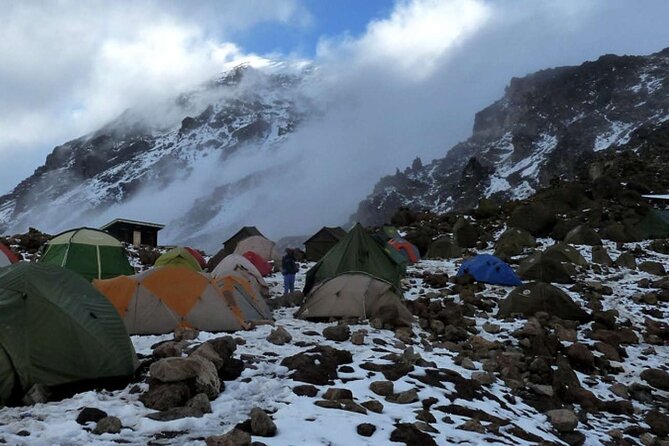
Summit day begins in darkness. After wake-up tea at 11:30 p.m., you leave around midnight with a headlamp and the guide team. The initial ascent takes about six hours and follows steep, winding paths through stone and ice near the Ratzel and Rebmann Glaciers.
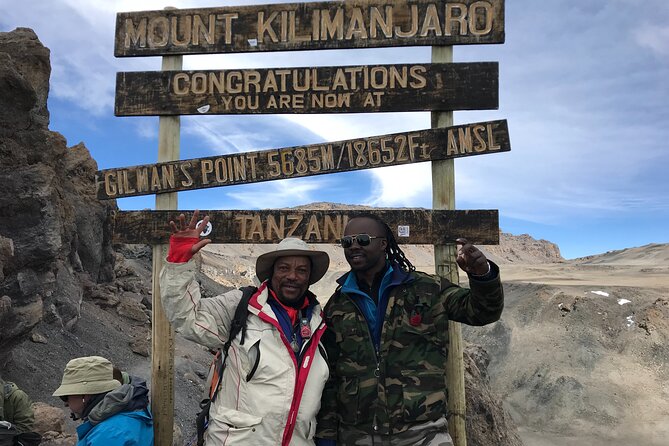
The route reaches Stella Point first. From there, you continue toward Uhuru Peak, the highest point on Kilimanjaro, at 5,895 meters. The supplied schedule lists six to eight hours for the ascent, followed by seven to eight hours of descent. It also gives the day’s walking as roughly seven kilometers up and 23 kilometers down, so this is an exceptionally demanding day.
Sunrise near Stella Point is the emotional reward for the dark hours below. You get time for photographs at the summit, but do not let the camera distract you from the cold and altitude. Your guide will help manage the pace and the decision-making if conditions become difficult.
After the summit, you descend to around 3,100 meters. Going downhill may sound easier, but tired legs and loose stone can make it punishing. The day is long enough that you should think of the summit as only halfway through the challenge. Proper footwear, trekking poles if you use them, and warm layers matter here.
The itinerary contains a minor elevation inconsistency for this day, listing several figures between 4,600 and 5,895 meters. The important point is clear: you start from high camp, reach Uhuru Peak, then make a major descent. Ask the operator to confirm the exact camp elevations and day schedule before departure.
Day 7: Mweka Gate, a shower, and a certificate
The final morning begins with breakfast and a farewell from the mountain crew. You descend from about 3,100 meters to 1,800 meters through rainforest, covering around 10 kilometers in three to four hours.
The walk down can feel surprisingly satisfying. You have left the summit behind, and the return to trees signals that the hardest work is done. At Mweka Gate, the equipment is loaded into the vehicle, and the itinerary includes a celebratory beer or champagne before you drive back to Moshi.
At Kilimanjaro Wonders Hotel, you receive lunch, dinner, and a hot shower. A certificate of achievement is presented after dinner. This final hotel stop is valuable, not decorative. After a midnight summit start and a full day on the mountain, clean clothes, food, and a bed are exactly what you want.
The final morning is also when tipping is handled. Tips are not included, so plan to thank the guides, porters, cooks, and other crew separately or as a group, according to the arrangement you make with the operator.
The crew and personal service
The company has more than ten years of experience, and the strongest praise centers on organization and the human side of the climb. Oscar is described as quick to answer questions and helpful when plans changed. That matters before a high-altitude trip, when clear replies about equipment, transfers, and timing can prevent stress.
Saul receives repeated praise as a guide, with comments about his friendly manner and experience. Jonas is described as the head of a well-organized team, and Mvungi is remembered as friendly and funny. The names are useful, but you should confirm who will lead your particular departure because the supplied information does not promise a specific guide.
Porters and cooks also receive strong praise. That is important because they shape your daily comfort more than the summit photograph does. Hot drinks, meals, tents, water, and camp support keep the trek moving when your own energy is low.
The private format gives you more room to discuss pace and daily needs. It does not remove the physical demands of the mountain, and it does not guarantee a summit. It does mean the group is your own, rather than a mixed public departure.
Who should book this Kilimanjaro trek?
This suits you if you want a structured climb with a full support crew and a private group. It is a good fit for people who value careful logistics, camping support, hotel arrangements, and direct communication with the operator.
You need a strong level of physical fitness. The itinerary includes six to eight hours of ascent on summit day, followed by up to eight hours of descent. You also need to be comfortable camping for several nights, waking around midnight, walking at altitude, and handling changing weather.
Children under 15 require special arrangements before trekking Kilimanjaro. The supplied information does not give an age limit beyond that requirement, so families should ask the operator for approval before booking.
This is less suitable if you want a relaxed holiday with generous sleep each night. It is also a poor match if you dislike group support systems, long mountain days, or the possibility that weather may affect the schedule.
Booking cautions and practical details
Pickup is offered, mobile tickets are available, and group discounts may be offered. The experience operates every day according to the stated availability, but confirm your exact dates and pickup details before paying.
The activity requires good weather. If poor weather causes cancellation, you are offered another date or a full refund. In other circumstances, the booking is non-refundable and cannot be changed, so travel insurance is worth considering.
Bring or arrange personal climbing gear before you arrive. Local hire is available, but the package does not include those items. Travel and baggage insurance are also your responsibility.
Should you book it?
I would consider this trek if you want the Machame Route with private support, included meals and tents, and a company that has earned strong marks for communication and crew service. The organization around Oscar, the repeated praise for guides such as Saul, and the care given to porters and cooks are meaningful advantages.
I would not book it casually. The price is substantial, tips and personal gear come extra, and summit day is a serious endurance test. If you are fit, accept the early start and camping conditions, and want a well-supported seven-day attempt on Uhuru Peak, this package offers a clear and practical way to take on Kilimanjaro.
FAQ
How long does the Kilimanjaro trek last?
The experience lasts approximately seven days, including the ascent through the Machame Route, the summit attempt, the descent to Mweka Gate, and the return to Moshi.
What route does the trek use?
The trek uses the Machame Route for the ascent and joins the Mweka Route for the descent after the South Circuit.
Is this a private tour?
Yes. Only your group participates in the activity.
What is included in the price?
The price includes food, tents, meet and greet services, mountain crew salaries, specified transfers, pre and post climb accommodation, seven lunches, six dinners, and six breakfasts.
Are personal climbing clothes and equipment included?
No. Personal climbing gear is not included, although gear can be hired locally.
Are guide and porter tips included?
No. Gratuities for guides and porters are not included.
What fitness level is required?
You should have a strong physical fitness level. Summit day includes a midnight departure, six to eight hours of ascent, and seven to eight hours of descent.
Can children join the trek?
Children under 15 need special requirements before trekking Mount Kilimanjaro. Contact the operator before booking if someone under 15 is in your group.
What happens if bad weather cancels the trek?
The experience requires good weather. If it is canceled because of poor weather, you are offered a different date or a full refund.
More Kilimanjaro Hikes in Tanzania
- #1. Best Kilimanjaro Day hike Tour-Machame Route-ISMANI
★ 4.2 · 47 reviews - Best Kilimanjaro Adventure 7 days Machame route Trekking
★ 5.0 · 42 reviews - Mount Kilimanjaro Day Hike Through Marangu Route to Mandara Hut
★ 5.0 · 37 reviews - Mount Kilimanjaro Day Hike
★ 4.5 · 23 reviews
Just added around Tanzania
- Full Day Private Hiking Tour to Kilimanjaro Mountain★ 5.0 · 22 reviews
- Mount Kilimanjaro Day Hike Through Marangu Route to Mandara Hut★ 5.0 · 37 reviews
- Mount Kilimanjaro Day Hike★ 4.5 · 23 reviews
- Private Kilimanjaro Hike 7 Day Lemosho Route★ 5.0 · 60 reviews
- Best Kilimanjaro hiking day trip tour with Kilinge Adventures★ 4.5 · 54 reviews
- Best Kilimanjaro Adventure 7 days Machame route Trekking★ 5.0 · 42 reviews
- #1. Best Kilimanjaro Day hike Tour-Machame Route-ISMANI★ 4.2 · 47 reviews
- Arusha: Napuru Waterfalls Guided Hike★ 4.8 · 39 reviews
Kilimanjaro Hikes, side by side.
8-Day Small-group Lemosho Kilimanjaro Summit Trekking
Read our review →
Private Full Day Hiking Experience to Marangu Route
Read our review →
Best Kilimanjaro hiking day trip tour with Kilinge Adventures
Read our review →
#1. Best Kilimanjaro Day hike Tour-Machame Route-ISMANI
Read our review →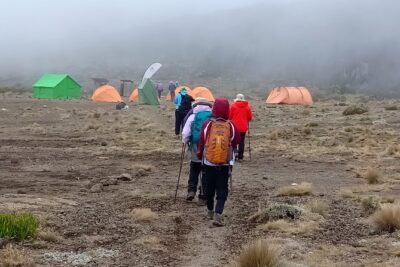
Best Kilimanjaro Adventure 7 days Machame route Trekking
Read our review →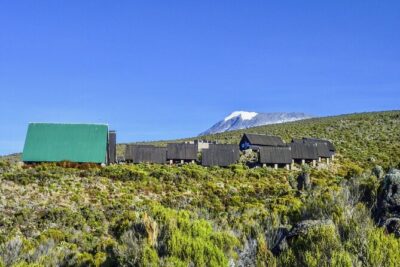
Mount Kilimanjaro Day Hike Through Marangu Route to Mandara Hut
Read our review →This walk also sits in