
REVIEW · JAPAN
Kyoto: 3-Hour Fushimi Inari Shrine Hidden Hiking Tour
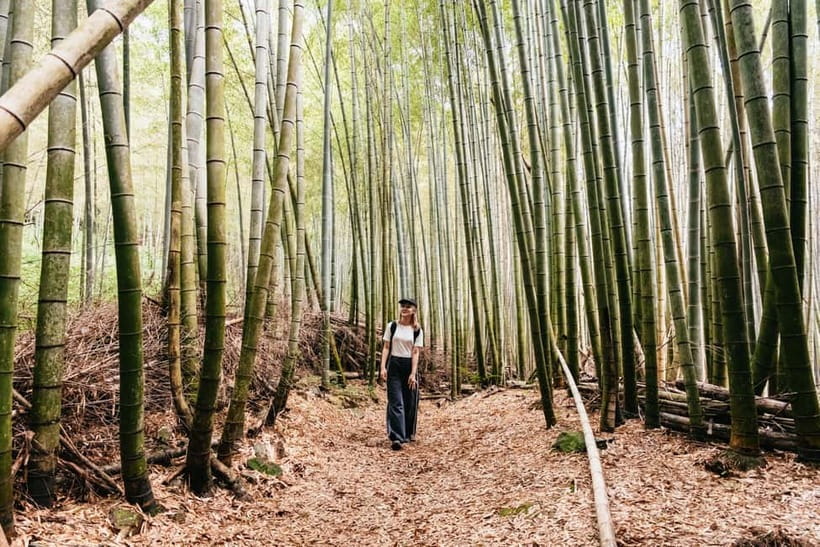
Fushimi Inari is famous for its endless red torii gates, but the best part of this tour comes before you reach the busy shrine entrance. You walk from Tofukuji through quiet neighborhoods, bamboo, forest trails, and small altars, then approach the main shrine from the mountain’s back side. For much of the hike, you trade crowds for birdsong, shade, and old stone shrines.
I like the unusual route and the small-group format. Guides such as Hina, Naru, Shiori, and Yuto have been praised for explaining Shinto customs, helping with respectful offerings, and taking photos along the way. The drawback is clear: this is a real 7-kilometer hike with steep sections, stairs, uneven ground, and possible mud. It is not a casual stroll through the torii gates.
Key points to know before you book
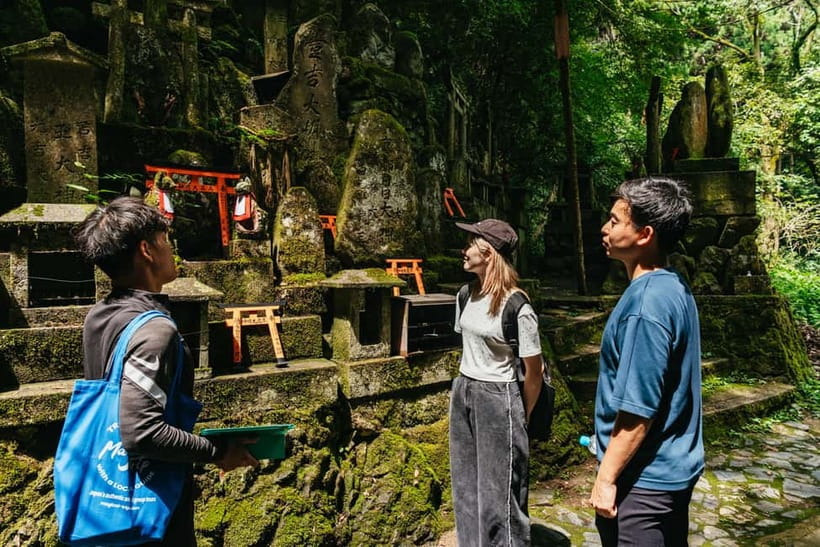
- A back-route approach: You reach Fushimi Inari through forest trails instead of starting in the busiest area at the base.
- Two bamboo groves: One appears early on a quiet trail, and another comes as you descend toward the shrine.
- About 7 kilometers of walking: Allow for hills, stairs, rocky paths, and regular stops.
- The crowd-free promise has limits: The first half can be remarkably quiet, but the famous lower shrine becomes busy.
- Small groups matter: The tour accepts up to nine people, with private options also available.
- Bring proper clothes: Long sleeves and long pants help with insects, brush, shade, and changing weather.
Why this route changes your Fushimi Inari visit
Most people reach Fushimi Inari by train, step through the main entrance, and begin walking beneath the famous vermilion gates. That approach is easy, but it puts you directly into Kyoto’s heaviest photo traffic.
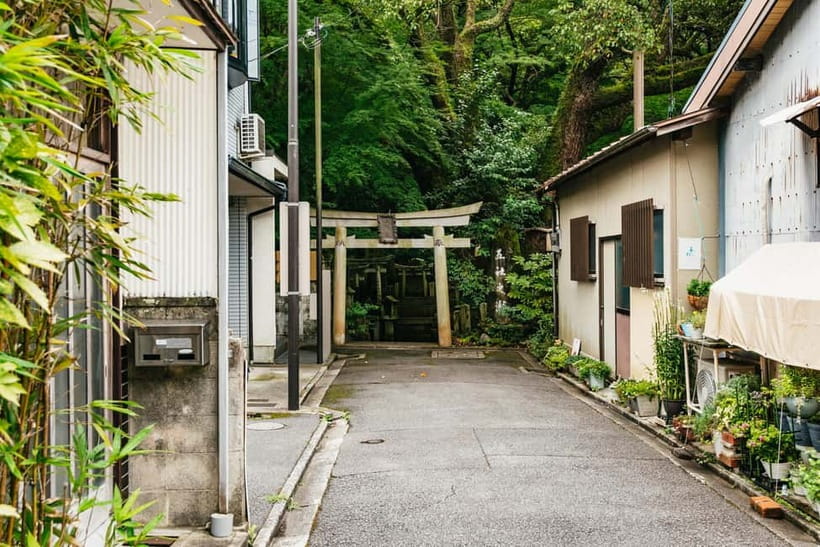
This tour begins outside FamilyMart Nakai Tofukuji, beside Exit 2 of Tofukuji Station. From there, you walk through a quieter neighborhood and visit Tofukuji Temple before reaching Mount Inari. The route lets you see how the shrine area connects with ordinary Kyoto streets, small religious sites, wooded slopes, and the better-known torii gate paths.
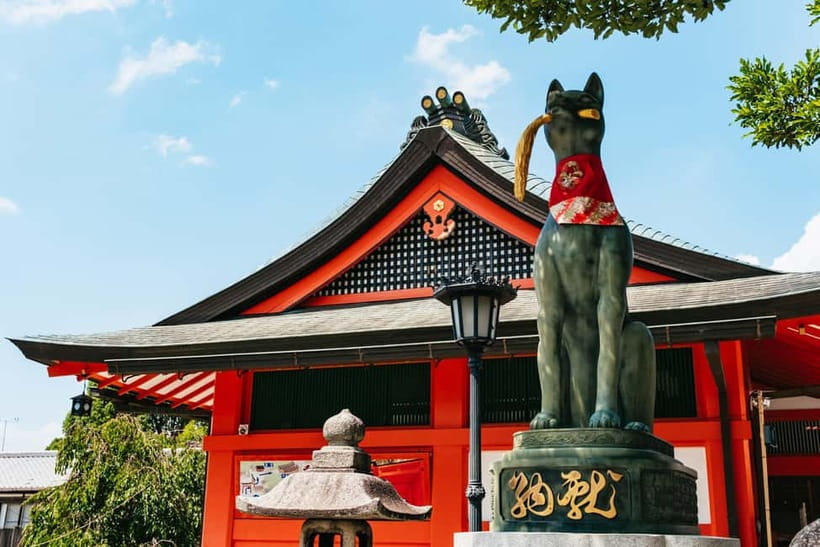
I like that the tour does not treat Fushimi Inari as one single photo stop. The mountain is covered with smaller altars, stone fox figures, side paths, and clusters of gates. A guide can explain what you are seeing and show you how to behave at a shrine, rather than leaving you to copy the nearest person in line.
You also get a more active visit. The trail gives you shade for roughly half the tour, which helps during Kyoto’s warmer months, though the forest can be humid and buggy. Mosquitoes are possible, so long sleeves and long pants are practical, not just polite packing advice.
More Three-Hour Experiences in the world:
- Mauritius: Tamarind Falls Highlights 3-Hour Hiking Trip
★ 4.9 · 588 reviews - Skaftafell Glacier Hike 3-Hour Small Group Tour
★ 4.5 · 580 reviews - Solheimajokull Glacier 3-Hour Small-Group Hike
★ 5.0 · 501 reviews
Starting at Tofukuji Station and Temple
The meeting point is FamilyMart Nakai Tofukuji, outside Exit 2 of Tofukuji Station. The location is useful because it is easy to identify, and the station connects to both the JR and Keihan lines.
If you come by JR, rapid and local trains are acceptable. On the Keihan line, use a sub-express, semi-express, or local train. Do not use an express train for this meeting point.
The first part takes you through a quieter section of Kyoto toward Tofukuji Temple. The temple visit lasts about 10 minutes, so do not expect a long temple tour. It works more as a calm opening to the hike and a chance to meet your guide and group before the uphill walking begins.
The group can include up to nine people, and private departures are available. A small group makes a real difference here. On narrow paths, you can hear the guide more easily, stop for photos without holding up a large crowd, and ask questions about shrine customs or local life.
Guides vary by departure. Names appearing across the available experiences include Hina, Naru, Shiori, Yuto, Yukari, Makoto, Nina, and Hikari. English ability can vary as well. Some guides provide detailed explanations about Shinto, Japanese culture, and shrine rituals, while one account described explanations as quite brief because of limited English. If detailed conversation is important to you, keep that possible variation in mind.
The first bamboo grove and quiet mountain trails
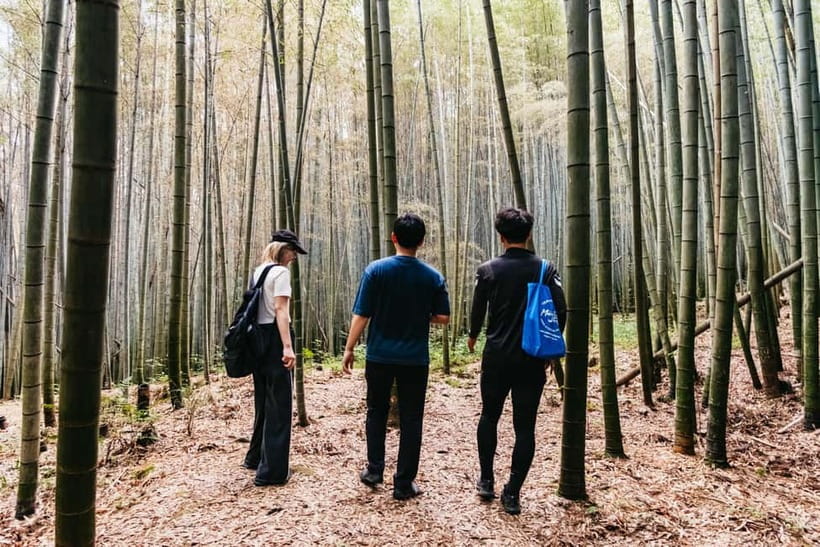
After Tofukuji, the route leaves the paved city paths and heads toward a secluded bamboo grove. This is one of the tour’s best features because you get bamboo scenery without making a separate trip to Arashiyama.
The grove is not presented as a stand-alone attraction with a formal entrance or long viewing platform. Instead, it appears as part of the mountain walk. You pass through natural surroundings, take photographs, and continue along trails that are far less used than the main Fushimi Inari route.
This section is where the tour earns its price. You are not simply paying for access to a shrine that is free to enter. You are paying for route-finding, local interpretation, a small group, and a way to connect several different parts of the area in three hours.
The ground can be uneven, especially after rain. Mud, slippery slopes, rocks, and roots are possible. Wear shoes with a firm sole, and avoid bringing anything you need to carry awkwardly. Large bags and luggage are not allowed, and a compact day bag is more sensible than a suitcase or oversized backpack.
Climbing Mount Inari through the torii gates
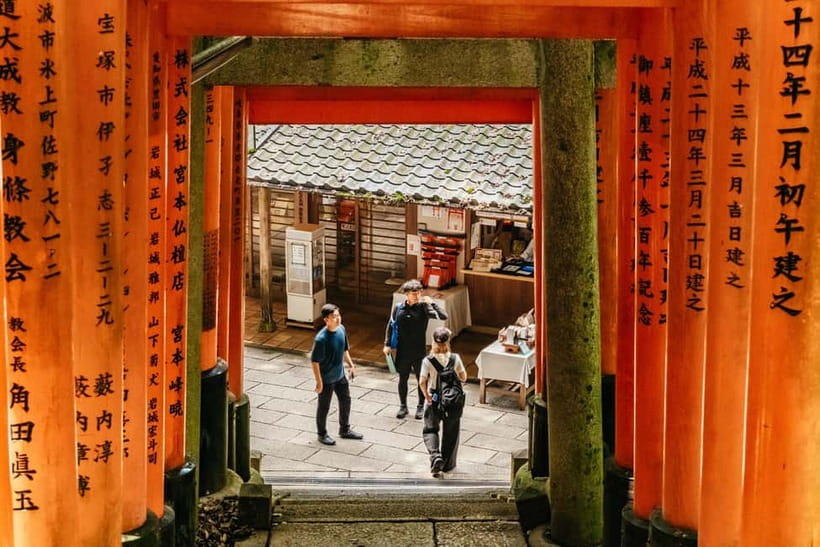
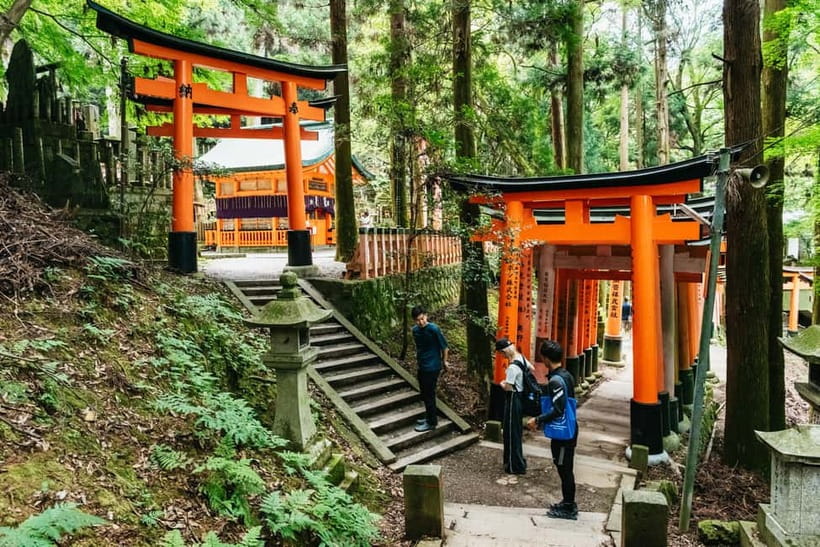
The quiet trail eventually connects with the main route of vermilion torii gates. Here, the visual character changes. The forest becomes more structured, the gates gather in long rows, and you begin to experience the Fushimi Inari scene most people came to see.
The tour climbs toward the summit of Mount Inari, passing many shrine altars along the way. One particularly enthusiastic account counted roughly 1,500 gates during the walk, though the exact number will depend on the route and how you count them. The important point is that you see the famous gate corridors without spending the entire tour in the busiest lower section.
This is not a flat path. You will climb stairs and slopes, and one participant’s fitness watch recorded the equivalent of about 50 flights. That gives you a useful sense of the effort. The tour is described as moderate, but that does not mean easy.
Your guide should make regular stops, and extra breaks can be requested. Still, you should be comfortable walking for several hours and handling hills. The tour is not recommended for people with limited mobility, people who have trouble walking, or those who are not in regular physical condition.
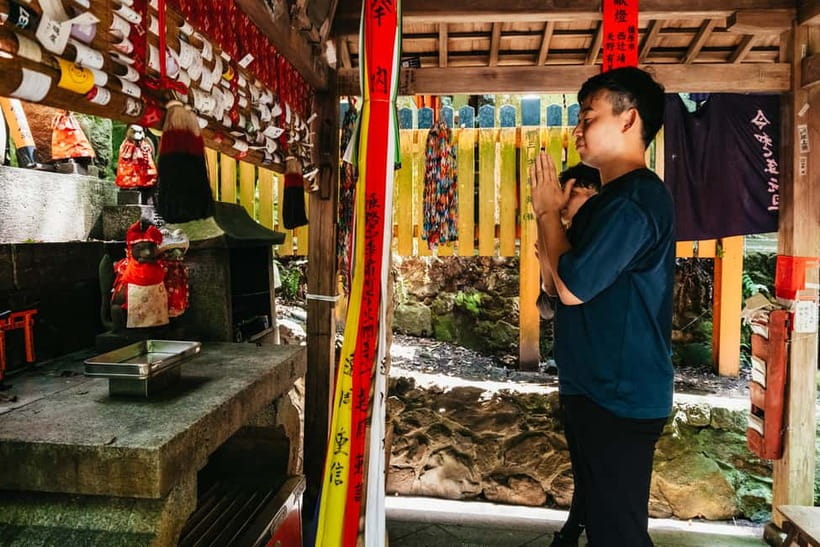
At the gates, guides can also explain basic shrine manners. You may learn how to enter a torii respectfully, make an offering, and understand the meaning of different amulets. These details turn a scenic walk into a more useful cultural visit.
More hikes and treks around the world:
- From Marrakech: Ouzoud Waterfalls Guided Hike and Boat Trip
★ 4.7 · 33,630 reviews - Berber villages : Atlas Mountains Day Hike from Marrakech
★ 5.0 · 14,007 reviews - Bali: Sunrise Mount Batur Guided Hike with Breakfast
★ 4.8 · 9,660 reviews - Bali: Mount Batur Sunrise Guided Hike and Natural Hot Spring
★ 4.8 · 9,284 reviews
Summit altars, forest shade, and the return route
At the upper mountain, the crowds usually thin compared with the base. The summit area is covered with smaller altars and religious markers, giving you a quieter look at Fushimi Inari’s sacred side.
The descent follows a forested trail rather than simply retracing the busy gate route. You visit more small shrines and reach a second bamboo grove. This change of scenery keeps the tour from feeling like one long staircase.
I especially like the balance of the return route. You get the quiet forest experience first, the dramatic torii gates in the middle, and the famous shrine area at the end. It is a smart order for anyone who wants both solitude and the classic photograph.
Rain can make this part more demanding. One walk became extremely muddy in wet weather, and another was described as steep and slippery after rain. The tour may be canceled in extreme weather, but ordinary rain can still affect the ground. If you continue in wet conditions, wear suitable shoes and move carefully.
Arriving at the famous lower shrine
The final section brings you down toward the main Fushimi Inari Shrine at the base of the mountain. This is the area most people recognize from photographs, and it is also where the crowds become much heavier.
That contrast is part of the experience. You have spent much of the tour in quiet woods, then suddenly arrive among the major torii corridors, shrine buildings, and visitors taking photos. The guide can help you understand the setting and point out the best places for a final picture.
This is also when the tour finishes, near the main shrine rather than at some distant mountain exit. You can stop for local street food and continue exploring Kyoto on your own. The published meeting and return details list FamilyMart Nakai Tofukuji as the start and finish point, so confirm the exact end arrangement when booking, especially if you plan a tight schedule afterward.
Do not expect the lower shrine to remain quiet. The tour avoids much of the congestion, but it cannot remove the crowds from Fushimi Inari’s most popular area. The realistic promise is a quieter approach and a better share of the mountain, not an empty shrine from start to finish.
Photos, guides, and the human side of the walk
Photos are included, which is useful on a hike where you may not want to keep asking other people to take pictures. Several guides, including Naru and Nina, have been singled out for taking thoughtful photos at scenic spots.
The guide also shapes the cultural value of the tour. Hina has led families patiently, including children, while Naru has been praised for combining photos with explanations. Shiori and Matthew have been noted for clear, engaging instruction, and Yukari for making regular stops and sharing information along the way.
Those details matter because the trail itself is free. Without a guide, you can walk around Mount Inari, but you may miss the meaning behind the offerings, fox imagery, altars, and shrine etiquette. You may also hesitate when a paved route meets a less obvious forest path.
The experience is not a formal lecture. It is a walking conversation, and the amount of detail depends on the guide and the questions you ask. Some guides are highly sociable and happy to discuss Japanese culture and everyday life. Others may offer shorter explanations in English.
Is $72 good value for three hours?
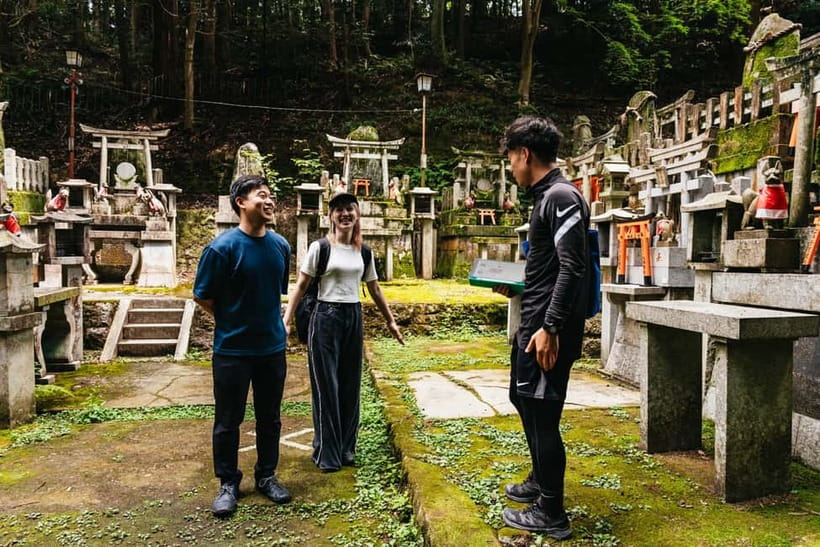
At $72 per person, this is not the cheapest way to see Fushimi Inari. The shrine itself does not require this tour fee, and independent hikers can explore the main route without paying for a guide.
The value comes from combining several things in one morning or afternoon:
- A route through forest trails that can be difficult to find alone
- A small group of no more than nine people
- An English-speaking local guide
- Cultural explanations and shrine etiquette
- Photos taken during the walk
- A planned route through bamboo, side altars, Mount Inari, and the main shrine
I think the price is reasonable for visitors who dislike crowded sightseeing and want more context than a self-guided walk provides. It is less attractive if you only want to photograph the main torii gates, have limited time, or do not enjoy hills.
The three-hour length is efficient for a Kyoto itinerary. You see a lot without giving up an entire day, but the distance means the schedule will feel active from start to finish. Plan to eat before or after, since additional food and drinks are not included.
What to wear and how to prepare
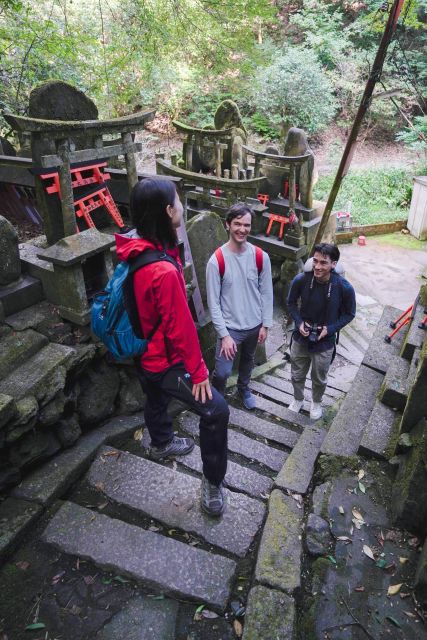
Take the clothing advice seriously. Long sleeves and long pants help protect you from mosquitoes, bugs, branches, and changing temperatures in the forest. You will also appreciate them when walking through shaded areas where the air feels cooler.
Wear comfortable walking shoes with good grip. The route includes paved sections, stairs, unpaved trails, rocks, and slopes. A small water bottle is sensible, though the supplied information does not specify drink stops, so do not assume refreshments are provided.
Leave luggage and large bags at your accommodation. A bulky load will make the uphill sections harder and can obstruct narrow paths.
Children under eight are not suitable for this activity. Children eight and older need permission from a parent or guardian before booking. Families with older children can enjoy the route, but parents should judge fitness honestly. The hike has regular stops, yet it still requires steady walking and climbing.
Free cancellation and date or time changes are available up to 24 hours before the start, subject to availability. Weather can affect the departure, especially during extreme conditions.
Who should book this Fushimi Inari hike?
Book it if you want to see Fushimi Inari beyond the famous lower gate corridor. You will get bamboo, forest, small altars, mountain views, shrine customs, and a quieter approach before joining the main route.
It suits hikers with moderate fitness, photographers who want less predictable views, first-time visitors who want cultural guidance, and families with older children who are comfortable walking uphill. It also makes sense for anyone who has already seen crowded Kyoto attractions and wants a slower, more natural morning.
Skip it if you need step-free access, dislike uneven paths, want a relaxed stroll, or are carrying luggage. You should also think twice if rain is forecast and you do not have suitable clothing and footwear.
Should you book it?
I would book this tour if your ideal Fushimi Inari visit includes forest time, quiet paths, and a guide who can explain what the shrines and rituals mean. The back-route design is the main reason to choose it, and the final arrival at the famous shrine gives you the classic sight without making the whole experience a crowd scene.
The deciding question is simple: do you want a hike that includes Fushimi Inari, or a short walk to take photos of Fushimi Inari? If you want the first option, $72 buys a well-planned route and useful local help. If you want the second, visit independently and save the money.
FAQ
How long is the Fushimi Inari hiking tour?
The tour lasts three hours and covers approximately 7 kilometers. It includes hills, stairs, forest trails, and regular stops.
Where does the tour meet?
Meet outside FamilyMart Nakai Tofukuji, beside Exit 2 of Tofukuji Station.
How do I reach the meeting point by train?
You can use rapid or local JR trains. On the Keihan line, use sub-express, semi-express, or local trains. Do not use Keihan express trains for this meeting point.
Does the tour visit the main Fushimi Inari Shrine?
Yes. The route reaches the mountain and then finishes at the main shrine area at the base, where you can enjoy local street food afterward.
Will the tour avoid crowds the entire time?
No. The forest sections and back trails are usually much quieter, but the famous lower shrine and main torii area can become busy.
What should I wear?
Wear long sleeves and long pants because mosquitoes and other bugs may be present. Comfortable walking shoes are important for stairs, slopes, rocks, and uneven forest trails.
Is the tour suitable for people with limited mobility?
No. The activity is not recommended for people with mobility impairments or people who have difficulty walking. It requires moderate fitness and sustained uphill effort.
Can I cancel or reschedule?
You can cancel for a full refund or request a date and time change up to 24 hours before the start, with rescheduling subject to availability. The tour may be canceled during extreme weather.
Just added around the world
- Rovaniemi: Korouoma Frozen Waterfalls Hike & Hot BBQ Lunch★ 4.9 · 90 reviews
- Hidden Waterfalls Hiking Adventure★ 5.0 · 148 reviews
- Hike to Frozen Waterfalls of Korouoma Including BBQ Lunch from Rovaniemi★ 5.0 · 84 reviews
- Private Family Hike in Yosemite★ 5.0 · 37 reviews
- Private Guided Hiking Tour in Yosemite★ 5.0 · 94 reviews
- Guided Yosemite Hiking Excursion★ 5.0 · 80 reviews
- Yosemite Valley Private Hiking Tour★ 5.0 · 83 reviews
- From Valencia: Montanejos Tour with Guided Hike★ 4.1 · 86 reviews
3-Hour Experiences, side by side.
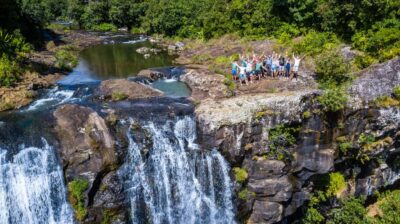
Mauritius: Tamarind Falls Highlights 3-Hour Hiking Trip
Read our review →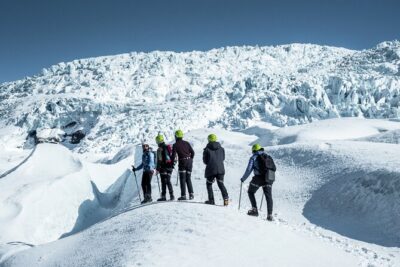
Skaftafell Glacier Hike 3-Hour Small Group Tour
Read our review →
Solheimajokull Glacier 3-Hour Small-Group Hike
Read our review →
Fox Glacier: Up to 3 Hours Hike with Helicopter Transfer
Read our review →
Mount Cook: 3-Hour Tasman Glacier Helicopter Ride and Hike
Read our review →
Mount Cook: 3 Hour Heli Hike to the Tasman Glacier
Read our review →This walk also sits in