
REVIEW · JAPAN
Morning Hiking Tour: Mt. Futaba & Hiroshima’s History
Hiroshima’s Mt. Futaba gives you something the Peace Memorial Park cannot: a quiet view of the city from within a patch of forest. You begin at Hiroshima Station, pass through shrines and more than 100 red torii gates, then climb to the Futabayama Peace Pagoda for a broad look over Hiroshima and the Seto Inland Sea.
I like the easy station meeting point and the small private format, limited to six people. I also like the finish at Okugu Shrine, where a local bento and open-air tea ceremony turn a short hike into a cultural morning. The main consideration is simple: this is an uphill walk, and the $157.60 price is high if you only want a viewpoint.
Key points at a glance
- A forested mountain begins close to Hiroshima Station, making this a practical way to leave the city streets without arranging transport.
- Hiroshima Toshogu and Kinko Inari Shrine add cultural depth before the trail reaches the summit.
- More than 100 red torii gates lead into Mt. Futaba, creating one of the tour’s most memorable walking sections.
- The summit combines views, forest bathing, breakfast, and tea, rather than treating the hike as a quick photo stop.
- The private group limit of six allows a personal pace, with time for questions about religion, architecture, local customs, and Hiroshima’s past.
- Food can be adapted for allergies, halal, Muslim-friendly, vegetarian, and vegan diets, if you contact the operator before booking.
Why this short Hiroshima hike is worth your morning
Many Hiroshima visitors spend their time around the Peace Memorial Park, the Atomic Bomb Dome, and Miyajima. Those places deserve their time, but they show only part of the city. Mt. Futaba offers a different view of Hiroshima, one connected to Shinto shrines, wooded slopes, local routines, and the city’s recovery after 1945.
The walk starts at Hiroshima Station, so you do not lose time on a long bus ride. From the station, the route moves quickly from urban streets toward Hiroshima Toshogu and the mountain paths. That change is part of the appeal. You can watch the city wake up, then find yourself among trees and shrine buildings soon afterward.
The experience is led in English by guides such as Michi, Naomi, Michiyo, Kota, and Lisa, although the assigned guide can vary. The strongest part of the guiding is not simply pointing out buildings. The guides explain religious customs, architectural details, Hiroshima’s past, and the meaning of the sites along the route. This helps you see the shrines as living places rather than as decorative stops on a hike.
The tour is priced at $157.60 per person, which places it firmly in the premium category for a three-and-a-half-hour activity. You are paying for a private format, a guide, food, a tea experience, and a carefully linked route. If you would rather hike independently and buy breakfast near the station, the cost will seem steep. If you want cultural context and a well-organized morning with your own group, the price becomes easier to justify.
More Mountain and Summit Hikes in Japan
- Full Day Hiking Tour at Mt.Takao including Hot Spring
★ 5.0 · 52 reviews - Hike Japan Heritage Hakone Hachiri with certified mountain guide
★ 5.0 · 46 reviews - Explore Kiso Valley : Magome – Tsumago Mountain Trail Walk
★ 5.0 · 33 reviews
Starting at Hiroshima Station before the city gets busy
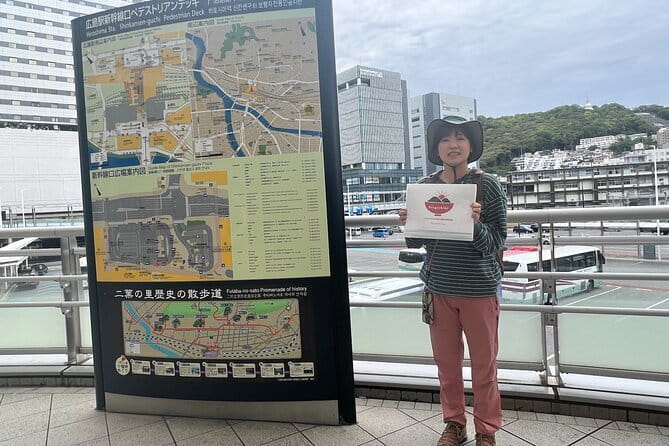
The meeting point is at Hiroshima Station, at the Shinkansen Exit area, listed as 1-2-37 Matsubaracho in Minami Ward. The planned start appears as either 7:30 a.m. or 10 a.m., depending on the selected departure. Since the two times lead to different finishing times, check your booking carefully and arrive with enough time to find your guide.
The early departure has a special advantage. Hiroshima is already active with commuters and students, but the mountain paths remain calm. One local account described pausing to watch the orange morning light before setting out. That small moment captures the tone of the tour well: it begins as an ordinary city morning and gradually becomes something quieter.
Your guide explains the route at the station before you walk. This is useful because the tour combines city streets, shrine grounds, uneven mountain paths, and summit stops. You can also raise dietary needs at this stage, though food requests should be made before booking rather than left until the morning.
Hiroshima Toshogu reveals the city’s religious side
The first major stop is Hiroshima Toshogu, reached after the introduction and short walk from the station. You spend about 30 minutes here, learning about the shrine’s cultural assets, architecture, and place in local religious life.
This is more than a quick look at a gate before hiking onward. Guides have explained the meaning of decorative patterns, building techniques, and the care taken by craftsmen. Those details give you a better way to read Japanese shrine architecture. You may notice that the tour treats the site with respect, explaining customs rather than turning them into a backdrop for photographs.
The timing works well. You are still fresh, so you can focus on the guide’s explanation before the route becomes more physical. It also gives the morning a clear structure: first understand the sacred setting, then follow the path deeper into the mountain.
The drawback is that the stop may feel slow if you only want to reach the summit. This tour is not built for a fast ascent. Its value comes from the connections between religion, nature, architecture, and Hiroshima’s modern story.
Kinko Inari Shrine and the first mountain paths
From Hiroshima Toshogu, the route continues to Kinko Inari Shrine. You spend about 25 minutes here while beginning the climb into Mt. Futaba. The shrine section is followed by a series of red torii gates, with more than 100 along the route.
The torii create a strong visual transition. The city begins to feel farther away even though you have not traveled far from the station. The red gates mark the sacred route and give the climb a sense of purpose. Your guide can also explain the traditions connected with the shrines, which is especially useful if this is your first close look at Japanese religious sites.
This is the point where you should judge the physical demands honestly. Several descriptions call the hike easy or manageable, and the full experience suits many people who do not regularly hike. Still, the climb is uphill, and one direct description of the tour’s character was simply: it is an uphill hike.
Wear shoes with a secure sole and bring water. The tour information does not provide a detailed elevation profile, so I would not treat the word easy as a promise that the route is flat. If you are comfortable with a short uphill walk and occasional uneven ground, the pace should be reasonable. If hills are difficult for you, ask the operator for current route details before booking.
More Mountain and Summit Hikes in the world:
- Berber villages : Atlas Mountains Day Hike from Marrakech
★ 5.0 · 14,007 reviews - Bali: Sunrise Mount Batur Guided Hike with Breakfast
★ 4.8 · 9,660 reviews - Bali: Mount Batur Sunrise Guided Hike and Natural Hot Spring
★ 4.8 · 9,284 reviews - From Marrakech: Atlas Mountains Full-Day Hiking Trip w Lunch
★ 4.8 · 7,417 reviews
The Futabayama Peace Pagoda gives you the big view
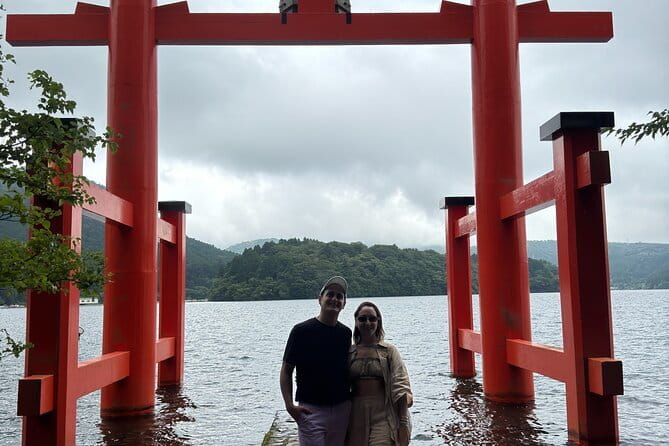
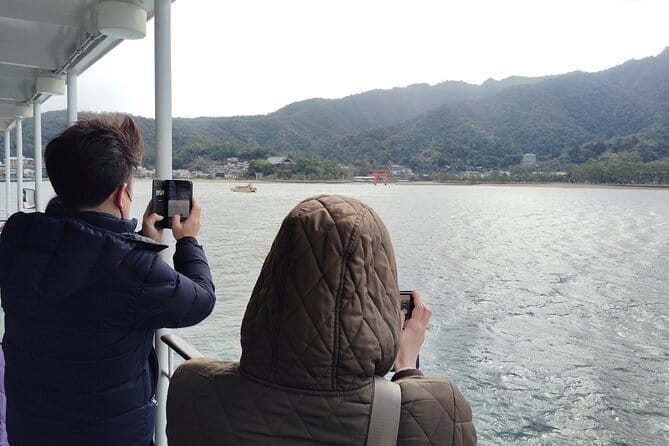
The high point is the Futabayama Peace Pagoda, where you look across Hiroshima City, the Seto Inland Sea, and Miyajima. On clear mornings, this is the scene that gives the hike its strongest sense of place. You can see how close the urban center is to wooded hills and water.
The view also carries meaning. Hiroshima is often presented through its wartime destruction and its role as a peace city. From Mt. Futaba, you see the present-day city functioning below you. Guides connect the view with Hiroshima’s recovery, which adds weight without keeping the morning inside a museum or memorial.
Miyajima is visible from the summit, and the islands of the Seto Inland Sea become part of the picture. The view can vary with weather and air clarity, so do not book this solely for a guaranteed panorama. The mountain, shrine route, and guided interpretation still give the tour value if haze limits the distant islands.
The summit portion lasts about two hours and five minutes in the listed schedule, including the viewpoint, forest bathing, bento meal, and tea ceremony. That long block is important. You are not rushed to take a picture and leave. You have time to sit, eat, listen, and enjoy the setting.
Forest bathing slows the pace before breakfast
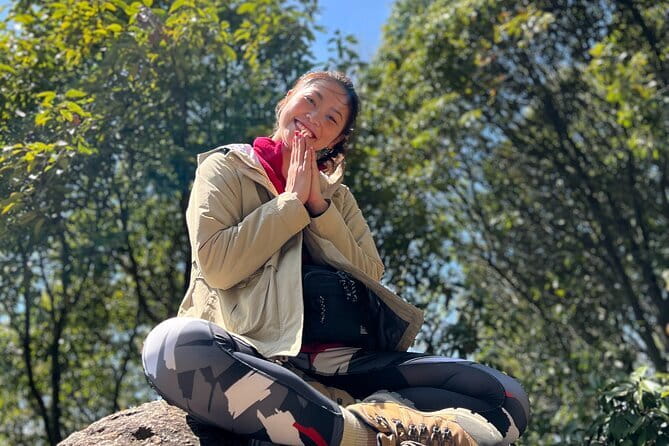
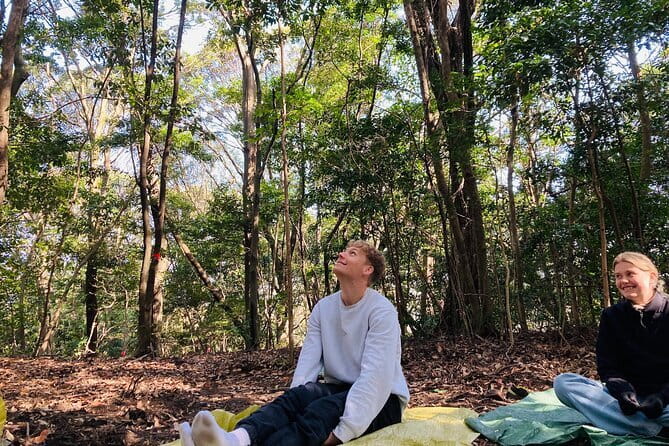
After reaching the top, the tour includes Shinrinyoku, or forest bathing. Here, the idea is simple: pause in the trees and pay attention to the quiet, air, and surroundings rather than treating the forest as a corridor to the next stop.
This is one of the experience’s more distinctive features. Many city hikes focus on reaching the viewpoint. This one gives you a planned interval to slow down after the climb. That can be especially welcome if you are not used to morning exercise.
The forest section is also where the private format matters. With a maximum of six people, the guide can adjust the pace and explain what you are experiencing without addressing a large crowd. The activity is not a strenuous outdoor expedition, but it is more involved than a simple shrine visit.
The season will shape the mood. Spring flowers, summer greenery, autumn color, and winter air can each change the look of Mt. Futaba. One cool-weather outing began at about 5 degrees Celsius, so an early start in November can feel cold even when the walking itself is manageable. Bring layers, especially for the summit stop.
A bento at Okugu Shrine makes the summit feel local
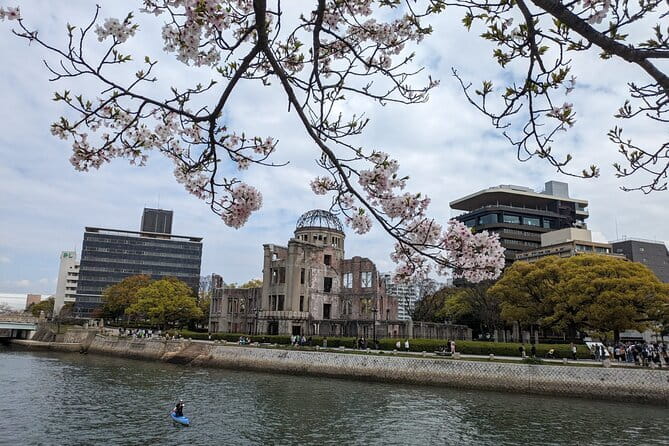
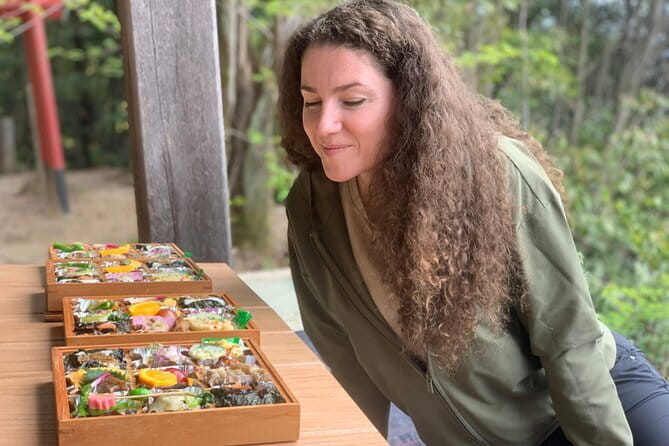
At Okugu Shrine, you stop for a bento filled with local products. Eating at the mountain shrine, with Hiroshima spread out below, is a central part of the experience rather than an afterthought.
The food adds practical value to the price. You are not only paying for a guide and a walk. You receive a meal in a setting that would be difficult to arrange in the same way on your own. The bento also gives you a chance to sit down and recover before the tea ceremony.
Dietary flexibility is a real advantage. The food and drinks can be adjusted for food allergies, halal, Muslim-friendly, vegetarian, and vegan requirements. You must contact the operator before applying, so do not assume a last-minute request can be handled.
The meal may be less appealing if you prefer to choose your own restaurant or if you have a very specific breakfast routine. It is also worth remembering that the setting is outdoors at a shrine, not a café with guaranteed indoor comfort. Weather and temperature may affect how relaxed the meal feels.
Nodate brings tea into the open air
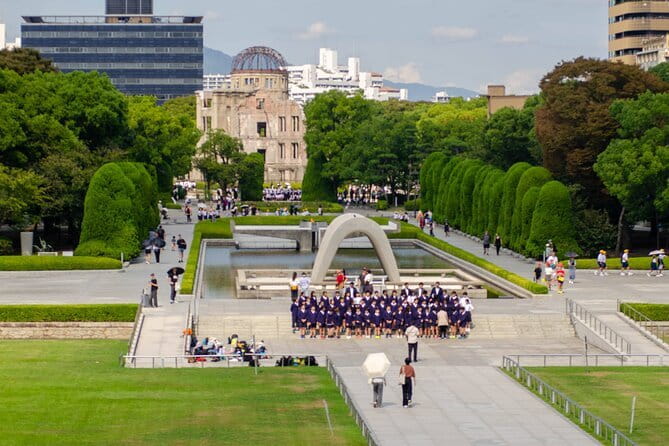
The final special activity is Nodate, an open-air tea ceremony performed by your guide. It is a fitting close because it joins the mountain setting with a traditional Japanese practice.
You do not need to be a tea expert to appreciate this part. The pleasure lies in the setting, the deliberate pace, and the chance to ask about customs. After the climb and meal, the ceremony creates a calm pause before returning to the station.
This is also where the tour feels most different from a standard walking tour. A normal city sightseeing route might include a shrine and a viewpoint, then move on. Here, the morning ends with tea in the mountain environment, which gives the experience a stronger local character.
The tea ceremony may be less satisfying if you expect a formal performance in a historic tea house. Nodate is specifically open-air, and the guide conducts it as part of the hike. Think of it as an intimate cultural activity connected to the place, not a long specialist demonstration.
How the timing and group size affect the experience
The full activity takes about three hours and 30 minutes. The schedule lists a station meeting, 30 minutes at Hiroshima Toshogu, 25 minutes at Kinko Inari Shrine, about two hours at the summit area, and a return to Hiroshima Station.
The listed start and finish times vary between an early option ending around 11 a.m. and a later option ending around 1:30 p.m. Confirm the exact departure when you reserve. This matters if you have a train, lunch reservation, museum visit, or ferry planned afterward.
A maximum of six people keeps the format personal. You are not joining a large group that must wait for slow walkers or rush ahead for a schedule. The guides named above have been praised for friendly explanations and fluency in English, but the individual guide is not guaranteed, so book for the route and format rather than one specific person.
Mobile ticketing makes the start straightforward, but the key practical detail is still the meeting point at Hiroshima Station. Keep the confirmation accessible on your phone and allow time to locate the Shinkansen Exit area.
Who should book this Mt. Futaba experience?
I would choose this tour if you want to combine nature, shrine culture, Hiroshima history, and food in one morning. It is particularly useful on a first visit, when you want a local guide to explain what you are seeing instead of simply following a trail.
It suits couples, families with older children, and small groups who like a relaxed pace. Children from 0 to 5 years old can participate free, although the uphill route still means adults should decide if the walk fits their child.
You should also consider it if you have already visited the major memorial sites and want another side of Hiroshima. The mountain is close to the station, yet the experience feels removed from the main sightseeing circuit.
I would skip it if you want a hard hike, a long mountain day, or a low-cost independent outing. I would also think twice if you dislike fixed meals, shrine visits, or guided cultural explanations. The tour’s purpose is not speed. It is to connect the walk, the sacred sites, the view, and the morning meal.
Final verdict on the $157.60 price
At $157.60 per person, this is a costly short activity. The price makes the most sense when you value the private guide, small group, included bento, tea ceremony, and the convenience of starting and ending at Hiroshima Station.
I like that the experience shows Hiroshima beyond its best-known memorials. You get a forest close to the city, shrines with architectural and religious context, a clear view toward Miyajima, and a quiet meal above the streets. The uphill section is modest but real, and the weather can affect the summit view.
Book it if you want an easy-to-arrange, culturally focused morning with a personal guide. Skip it if your priority is saving money or climbing independently. For the right person, Mt. Futaba is a smart way to give Hiroshima a wider frame.
FAQ
Where does the tour begin and end?
The tour begins at Hiroshima Station near the Shinkansen Exit, at 1-2-37 Matsubaracho, Minami Ward. It ends back at Hiroshima Station.
How long does the experience last?
The activity lasts approximately three hours and 30 minutes.
What time does the tour start?
The listed start times are 7:30 a.m. and 10 a.m. The exact option depends on the booking, so confirm your selected start time.
How difficult is the hike?
The walk is described as manageable and suitable for most people, but it includes an uphill section on Mt. Futaba. The tour information does not provide a detailed elevation profile.
Is food included?
Yes. The experience includes a bento meal at Okugu Shrine and a Nodate open-air tea ceremony. Food and drinks can be adapted for allergies, halal, Muslim-friendly, vegetarian, and vegan needs if arranged before booking.
How many people can join?
The activity is limited to a maximum of six people. Children aged 0 to 5 can participate free.
What happens if bad weather is expected?
If cancellation seems likely because of weather, contact the tour operator directly by the morning of the previous day. The experience is non-refundable and cannot be changed after booking.
More Early-Start Trips around the world
- Funchal: Pico do Arieiro Sunrise Hiking Transfer
★ 4.8 · 4,021 reviews - Bali: Mount Batur Sunrise Trek With Guide and Breakfast
★ 4.8 · 3,461 reviews - Mount Batur Sunrise Hike and Natural Hot Spring Option
★ 5.0 · 1,927 reviews - Mount Batur Sunrise Hike with Breakfast
★ 5.0 · 1,757 reviews
More History Tours around the world
- Hiking the Historic Nakasendo Trail [1 Day Tour from Nagoya]
★ 5.0 · 104 reviews - Hathipaown Heritage Walk – A guided walk to Mini Everest
★ 5.0 · 58 reviews
Just added around the world
- Rovaniemi: Korouoma Frozen Waterfalls Hike & Hot BBQ Lunch★ 4.9 · 90 reviews
- Hidden Waterfalls Hiking Adventure★ 5.0 · 148 reviews
- Hike to Frozen Waterfalls of Korouoma Including BBQ Lunch from Rovaniemi★ 5.0 · 84 reviews
- Private Family Hike in Yosemite★ 5.0 · 37 reviews
- Private Guided Hiking Tour in Yosemite★ 5.0 · 94 reviews
- Guided Yosemite Hiking Excursion★ 5.0 · 80 reviews
- Yosemite Valley Private Hiking Tour★ 5.0 · 83 reviews
- Vancouver Rainforest Hike with Waterfalls, Suspension Bridge, Old Growth Forest★ 5.0 · 94 reviews
Mountain & Summit Hikes, side by side.
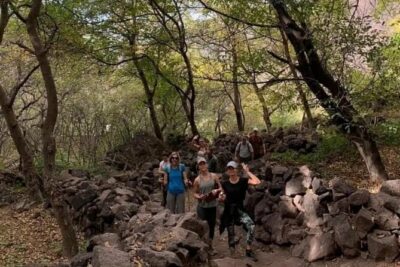
Berber villages : Atlas Mountains Day Hike from Marrakech
Read our review →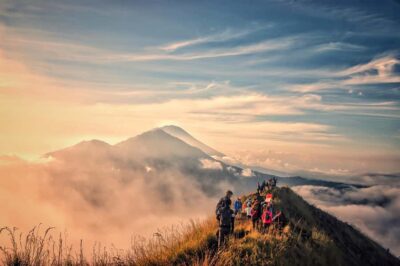
Sunrise Mount Batur Guided Hike with Breakfast
Read our review →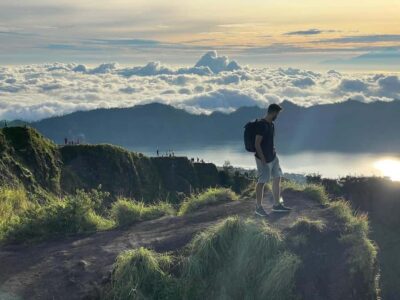
Mount Batur Sunrise Guided Hike and Natural Hot Spring
Read our review →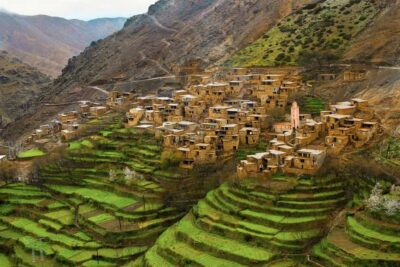
Mount Etna: Summit Guided Hiking Tour up to 3,400 m
Read our review →
Bovilla Lake & Gamti Mountain Hiking Day Trip
Read our review →
Mount Etna: Trek to 3000m with cable car and 4×4
Read our review →
Mount Batur Sunrise Trek With Guide and Breakfast
Read our review →This walk also sits in