
REVIEW · NEPAL
Annapurna Circuit Trek with Tilicho Lake
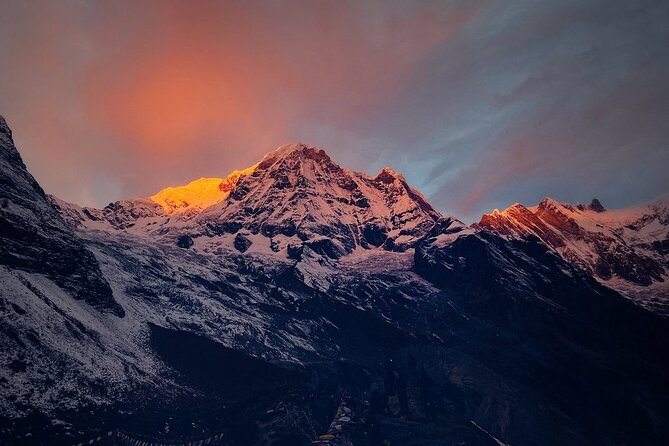
Tilicho Lake is the prize here: a high, cold-blue lake reached by a steep morning climb above the Annapurna Circuit. The route also gives you Thorong La Pass, rural villages, pine forests, old monasteries, and a soak at Tatopani’s hot springs. It is a big mountain trip, not a gentle walk with nice scenery.
I like the way the price bundles the practical pieces: lodging, three meals a day, permits, porters, and local transport. I also like the human side of the trip. Guides such as Hari Gurung, Suresh, Dev, and Kersing are praised for steady support, mountain information, and personal care. The main drawback is simple: altitude and long walking days demand good fitness, patience, and a willingness to start early.
Key points at a glance
- Tilicho Lake adds a real high-altitude detour: You spend two days reaching the lake and returning toward the main circuit.
- Thorong La is the hardest day: The pass crossing begins around 3 a.m. and reaches the trek’s highest point.
- The route changes character often: Expect river valleys, forests, dry high country, Tibetan-style villages, hot springs, and terraced farmland.
- The price covers the backbone of the trip: Tea-house lodging, meals, permits, guides, porters, and listed road transfers are included.
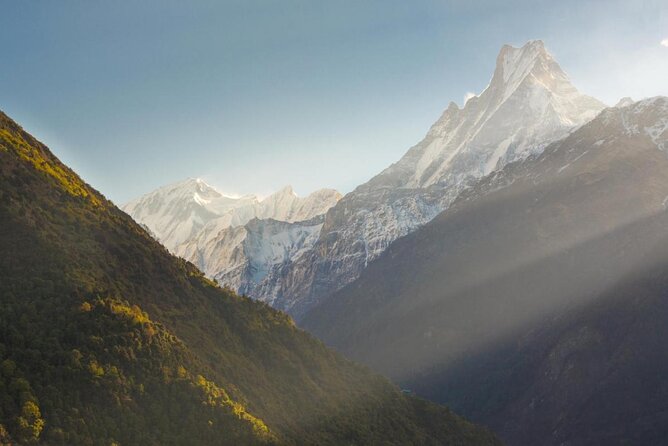
- Poon Hill gives you a final sunrise reward: The early climb offers views toward Annapurna, Dhaulagiri, Machhapuchhre, and Manaslu.
- This is a small-group mountain trip: The maximum group size is 15, with a licensed guide leading the way.
Why this 16-day route works
The Annapurna Circuit is appealing because it keeps changing. You begin with river valleys and farmland, move into pine and fir forests, reach the dry high country around Manang, then cross Thorong La into the Mustang side of the range. Adding Tilicho Lake gives you one of Nepal’s most memorable side trips without asking you to plan every lodge, meal, permit, and transfer yourself.
The $1,093 price is best judged as a package rather than a simple walking fee. It includes tea-house or lodge accommodation, breakfast, lunch, and dinner during the trek, plus the Annapurna Conservation Area Permit and TIMS card. Guide and porter wages, food, lodging, insurance, and transport for the support team are also covered.
You also get the drive from Kathmandu toward Syange, public transport from Muktinath to Tatopani, a night in a selected Pokhara hotel with breakfast, and a tourist bus from Pokhara back to Kathmandu. A flight back to Kathmandu is available as an extra option, but it is not included.
That arrangement removes many small decisions. You still need money for anything not named in the inclusions, but the main costs are already gathered into one booking. The package also includes rescue assistance for a complicated health problem, though that should not replace your own travel insurance.
More Lake and Lagoon Hikes in Kathmandu:
- From Tirana: Bovilla Lake & Gamti Mountain Hiking Day Trip
★ 4.9 · 4,397 reviews - From Tirana: Bovilla Lake & Gamti Mountain Hiking Tour
★ 4.9 · 3,003 reviews - From Tirana: Bovilla Lake & Gamti Mountain Viewpoint Hike
★ 4.8 · 2,053 reviews
Days 1 to 4: From Kathmandu to the high valley
The first day is mostly a road day. You leave Kathmandu early and drive for roughly six to seven hours, about 190 kilometers, toward Besishar and the trailhead area around Syange. The road journey takes you past farms, villages, rivers, and the first glimpses of the mountain ranges.
It is not glamorous transport, but it is useful. You cover a long distance before walking, and local road transport is already arranged. Keep your expectations practical: this is a necessary transfer, not a scenic luxury coach ride.
On Day 2, the trail reaches the Tal area after a suspension bridge and a steep climb. Waterfalls, sandy river edges, and the entrance to the Manang region make this a strong first walking day. The route begins to feel more remote, even though villages and basic lodges remain part of the journey.
Day 3 follows the river through pine, fir, oak, and maple forest toward Chame, the district headquarters of Manang. The trees provide shade and a softer setting before the route rises into harsher country. Mountain views open above the forest, including peaks around Lamjung and the Annapurna range.
On Day 4, the valley narrows and the Paungda Danda rock face becomes the main attraction. This curved wall rises about 1,500 meters from the river, giving you a clear sense of the scale of the route. Annapurna II and Pisang Peak also come into view.
These first days are not just warm-up miles. You are gaining height while moving through several distinct zones. Pay attention to how your body feels, since the route becomes more demanding after Pisang.
Days 5 and 6: Upper Pisang and Manang acclimatization
Day 5 uses the upper route through Pisang and Geru. This choice is worthwhile for the views, with Annapurna II, Annapurna III, Annapurna IV, Gangapurna, Tilicho, and Pisang Peak appearing along the way. The air grows colder, drier, and thinner as you climb.
You reach Manang, where the buildings, surrounding peaks, and high valley setting mark a clear change from the lower route. The walk is not only about reaching the next lodge. It is also about allowing your body to adjust before Tilicho Lake and Thorong La.
Day 6 is set aside for acclimatization. You hike toward Gangapurna Lake and its base camp, then spend time around Manang village and a monastery. Annapurna III, Tilicho, Pisang, and Chulu peaks provide the backdrop.
This rest day is one of the most important parts of the schedule. It may feel frustrating to walk less when you are eager to continue, but a planned pause is far better than rushing higher. The itinerary gives you time to explore rather than simply sit in a lodge, which makes the day useful and memorable.
Days 7 to 9: The Tilicho Lake detour
Day 7 heads toward Khangsar on an upper route. You descend toward a river, cross it, and continue through conifer forest before reaching the Tibetan-style settlement after several hours. From there, the trail continues toward Tilicho Base Camp.
This day is described as easier than some of the surrounding stages, but do not read that as effortless. The route still includes several hours on foot, and the next morning is the serious push to the lake.
Day 8 follows a relatively easy path through an area marked by landslides and unusual rock formations. You continue to Tilicho Base Camp, with Tilicho Peak and snow-covered mountains above you. The base camp is more than a sleeping stop: it positions you for an early start and reduces the amount of climbing needed on lake day.
Day 9 begins early to avoid the stronger afternoon wind. The climb to Tilicho Lake takes around two to three hours and is steep and steady. At about 4,919 meters, Tilicho Lake is the high point of this side trip and one of the visual highlights of the entire route.
The setting is stark and beautiful, with the lake surrounded by snow-covered peaks. You should allow the morning pace to be slow. The combination of altitude, cold, and sustained climbing is more important than reaching the lake quickly.
The return leg takes you back down toward Khangsar before reconnecting with the route toward Thorong Phedi. This detour adds major value for anyone who wants more than the standard circuit, but it also adds effort. If you are already struggling with altitude, Tilicho is not a minor add-on.
More Annapurna Treks in Kathmandu:
- Annapurna base camp trek 5 Days
★ 5.0 · 252 reviews - 14-Day Private Annapurna Base Camp Trek
★ 5.0 · 180 reviews - Trekking in Annapurna/Langtang/Everest/Upper Mustang regions
★ 5.0 · 161 reviews - Private 7 – Day Annapurna Base Camp Trekking
★ 5.0 · 50 reviews
Days 10 to 12: Thorong Phedi and the big pass
Day 10 includes a memorable cultural stop at Tare Gumba, described as a thousand-year-old monastery. You descend from Khangsar, cross a bridge, and follow the Thorong Khola valley toward Yak Kharka and the high route ahead.
Day 11 is a shorter but important approach to Thorong Phedi. The settlement is busy because it serves as the launch point for the pass crossing. Along the way, you get views of Gundang, Syagang, Thorung Peak, and Khatungkan.
Thorong Phedi is not a place to expect comfort or entertainment. Its value is location. You sleep high so the next day’s climb can begin before the wind rises and before the route becomes harder in the afternoon.
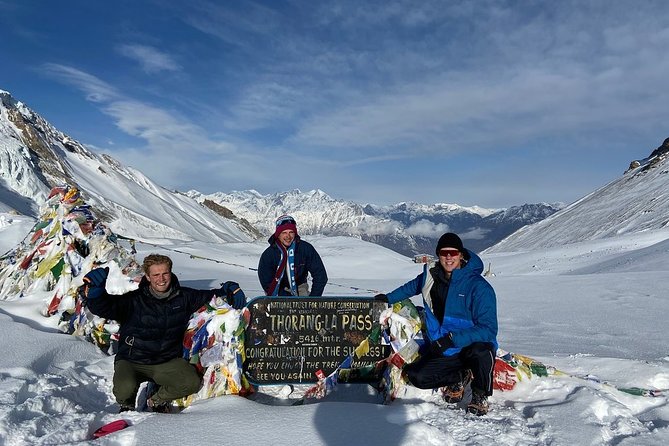
Day 12 is the toughest stage. You wake around 3 a.m. and climb to Thorong La, one of the world’s highest pass crossings and the highest point of this trek. The morning is long, cold, and physically demanding, but the sense of achievement comes from crossing the pass under your own power.
After reaching the pass, you descend toward Muktinath. The descent is not automatically easy. Tired legs, loose ground, and the drop in altitude can all make the second half of the day feel long.
This is where a good guide matters. The published trips have included guides such as Dev, Suresh, Hari Gurung, and Kersing, with porters helping carry group gear. Their value is practical: they keep the group moving, explain the route and mountains, and watch how people are handling the height.
Days 13 to 15: Muktinath, hot springs, and Poon Hill
Day 13 begins with Muktinath Temple, an important pilgrimage site before the route turns toward Tatopani by car. The road transfer changes the rhythm of the trip, taking you from the high pass country to a lower valley.
Tatopani is known for its natural hot springs. After the cold and strain of Thorong La, a soak here is not just a sightseeing stop. It is a welcome chance to rest your legs.
Day 14 brings another shift. You climb through Sikha and Chitre, villages associated with the Thakali people, passing terraced farmland and forests of rhododendron, birch, and magnolia. You finish around Ghorepani.
This stage reminds you that the Annapurna Circuit is not only about high peaks. Village life, cultivated hillsides, forest paths, and local communities fill out the route. The drawback is that the climb to Ghorepani comes late in the journey, when your legs may still be recovering from the pass.
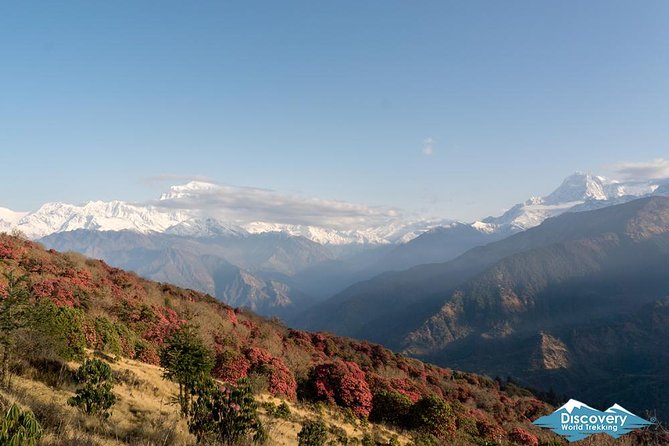
On Day 15, you rise early for Poon Hill at 3,210 meters. The viewpoint looks toward the Annapurna and Dhaulagiri massifs, Machhapuchhre, Manaslu, and surrounding rice terraces. It is a popular sunrise stop, but the early start is worthwhile if the weather is clear.
Poon Hill also gives the journey a satisfying final mountain view before the return to city roads. You walk down after the sunrise visit, then continue toward the transport connection.
Day 16: Returning to Kathmandu
The final day uses a tourist bus from Pokhara to Kathmandu. The package ends in Kathmandu after the return journey. A 225-minute flight is offered as an alternative, but you pay for it separately.
The bus keeps the cost lower, though it also makes the final day a long transfer day. If you are short on time or tired after two weeks in the mountains, the flight may be worth considering. If budget matters more, the included bus is the straightforward choice.
Meals, lodging, guides, and group size
Tea-house and lodge accommodation is included throughout the trek, along with breakfast, lunch, and dinner. This is a practical arrangement for the Annapurna route. You get a place to sleep and regular meals without having to arrange each night on your own.
The package also says extra dietary requirements can be catered for. You should still communicate those needs clearly before departure, since food options become more basic as the route rises.
The group can reach 15 people, which is small enough for a guide to keep track of the party but large enough that the pace may not suit everyone equally. A licensed Discovery World Trekking leader is included, as are porters.
The strongest praise connected with this company centers on the staff. Specific guides and porters named in recent departures include Suresh, Dev, Hari Gurung, Kersing, Bikesh, Damar, Sangkar, Asis, Monis, Rupesh, and Surya. Their reported strengths include kindness, mountain and village explanations, encouragement, carrying gear, and small acts of care such as preparing fruit plates.
Those details matter on a trek. A guide who simply points toward the trail is less useful than one who watches your condition and helps you understand the place. The guide and porter team can shape the whole trip.
Who should book this trek?
I would choose this route if you want a structured Himalayan trek with major altitude gains, changing scenery, and a strong sense of progress. It suits fit, active people who are comfortable walking for full days and handling steep climbs.
You should be ready for early starts, cold conditions, basic tea-house accommodation, long road transfers, and the possibility that weather affects the schedule. The Thorong La day is the key test, while Tilicho Lake adds another demanding high-altitude stage.
This is not the right choice if you want a relaxed holiday with short walks and hotel comfort. It is also not a good match if you prefer to set your own pace without a guide or group. The package’s main benefit is that you can concentrate on walking while the company handles permits, meals, lodging, staff logistics, and transport.
The published rating is 5 out of 5 from 368 ratings, with 99 percent recommending the trip. I would still treat those figures as one part of the decision. The route itself is demanding, and no rating removes the need for fitness, proper clothing, insurance, and careful pacing.
Should you book the Annapurna Circuit with Tilicho Lake?
Book it if Tilicho Lake and Thorong La are high on your Nepal wish list and you value a guide, porters, included meals, and organized transfers. At $1,093, the package offers solid value because it covers the main costs that can make a long trek complicated.
Choose another plan if you want a shorter route, private flexibility, or more comfortable lodging. Also note the strict policy: the booking is non-refundable and cannot be changed, except that a weather or minimum-group cancellation can lead to another date or a full refund.
For the right person, this is a serious but rewarding circuit. You get the high drama of the Annapurna range, the quiet challenge of Tilicho Lake, the cultural stop at Muktinath, the relief of Tatopani, and the sunrise finish at Poon Hill, all with the day-to-day burden shared by an experienced support team.
FAQ
How long does the Annapurna Circuit with Tilicho Lake take?
The trip lasts approximately 16 days, including road transfers from Kathmandu, the trek, the return to Kathmandu, and a night in a selected hotel in Pokhara.
Is Tilicho Lake included in the itinerary?
Yes. The route includes a detour to Tilicho Base Camp and an early climb to Tilicho Lake before returning toward the Thorong Phedi section of the circuit.
What is the highest point of the trek?
Thorong La Pass is the highest point of the trek. The crossing begins around 3 a.m. and is described as the most challenging part of the journey.
Are meals and accommodation included?
Yes. Tea-house or lodge accommodation and breakfast, lunch, and dinner are included during the trek. One night in a selected Pokhara hotel with breakfast is also included.
Are permits included?
Yes. The Annapurna Conservation Area Permit and Trekkers Information Management System card fee are included.
How large can the group be?
The maximum group size is 15 people. A government-licensed Discovery World Trekking guide leads the trek, and porter support is included.
Just added around Kathmandu
- Kathmandu: Nagarkot Sunrise & Hike with Lunch -Private/Group★ 4.9 · 122 reviews
- 14 Days Private Tour Everest Base Camp Trek★ 5.0 · 105 reviews
- 4 Days Poon Hill Trek★ 5.0 · 94 reviews
- Langtang Valley Trek★ 5.0 · 140 reviews
- Manaslu Circuit Trek★ 5.0 · 184 reviews
- Kathmandu: Dhulikhel to NamoBuddha Day Hike with Lunch★ 4.8 · 62 reviews
- Nagarkot Sunrise View & Day Hiking with Lunch – Private/Group★ 5.0 · 73 reviews
- Nagarkot Sunrise Trip & Day Hike with Lunch from Kathmandu★ 4.5 · 83 reviews
Annapurna Treks, side by side.
Trekking in Annapurna/Langtang/Everest/Upper Mustang regions
Read our review →
This walk also sits in